

Spellbrand Blog
Startup Branding: The Complete Guide from Zero to Launch

We have worked with hundreds of startups over the years, and we keep seeing the same pattern: founders pour months of energy into perfecting their product, securing funding, and building a team — only to treat branding as an afterthought. A logo slapped together in a weekend. A color palette picked on a whim. A messaging strategy that amounts to “we’ll figure it out later.”
And then they wonder why customers do not trust them, investors are not convinced, and their pitch decks fall flat.
The truth is, branding is not a finish line. It is the starting line. If you get it wrong, everything else — your marketing, your sales, your hiring — becomes an uphill battle. If you get it right, you build a foundation that compounds over time.
This guide consolidates everything we have learned about startup branding into one resource. Whether you are bootstrapping from your kitchen table or backed by venture capital, these principles apply. We will walk you through the essential identity steps, budget-friendly strategies that actually move the needle, and the mistakes that sink most startups before they even get started.
What Startup Branding Actually Means (It Is Not Just a Logo)
The first thing every startup founder needs to understand is what a brand actually is. It is not your logo. It is not your color palette. It is not what YOU say about your company.
Your brand is what THEY — your target audience — say about you when you are not in the room.
Your logo is the single most visible and tangible element of the brand, yes. But a brand is the total experience people have with your company. It is the emotional shorthand customers use to decide whether to trust you, buy from you, or recommend you to a friend.
A startup brand encompasses your core values (what you stand for and why you exist beyond making money), your unique value proposition (how you are genuinely different from competitors, not just “better”), your brand story (the narrative that connects your mission to your audience’s needs), your visual identity (the logo, colors, typography, and design language that make you recognizable), your messaging strategy (the consistent voice and tone across every touchpoint), and your brand promise (the expectation you set and consistently deliver on).
Having consistency in how your brand comes across at every single touchpoint is the key to a successful startup image. When your website says one thing, your social media says another, and your sales team says something else entirely, you do not have a brand. You have chaos.
Think of branding as the connective tissue that holds your entire business together. Every decision you make — from brand strategy to product packaging to customer service — should flow from a clear brand foundation.
Here is a useful litmus test: if someone visits your website, then sees your LinkedIn page, then receives your sales email, would they instantly recognize these as the same company? Would the tone, the visuals, and the promise feel unified? If the answer is “maybe not,” you have a branding problem — and fixing it starts with understanding that branding is a system, not a single deliverable.
The 5 Essential Brand Identity Steps for Startups
Building a brand identity is not about hiring a designer on day one and asking for “something cool.” It is a structured process, and when you follow these steps in order, everything downstream becomes easier.
Step 1: Define Your Core Values
Before you design anything, you need to answer the foundational questions. What do you stand for? What is the driving force behind your startup? How will your company change the world — or at least improve the lives of your customers?
Your core values are the non-negotiable principles that guide every business decision. They are what keep you grounded when the market shifts, when competitors undercut your pricing, or when you face tough calls about where to invest.
These core values feed directly into your mission statement. And a mission statement is not corporate fluff — it is a strategic tool. The best ones are simple, timeless, and honest. If you cannot explain your mission in a few sentences, you have not refined it enough. Genuine ideas are always simple.
To get your mission statement right, start by reflecting on what makes your company genuinely different — not feature differences, but brand differences that make you recall-worthy. Keep it simple: one clear paragraph, distilled to its essence. Focus on the timeless rather than tying it to a specific product that might change. Share it with people outside your inner circle and see if it resonates without explanation. Then display it prominently — for your team, your customers, and yourself.
Step 2: Nail Down Your Unique Value Proposition
Your USP is not a buzzword — it is the single clearest articulation of why someone should choose you over every alternative, including doing nothing. Notice we said “different from” your competitors, not “better than.” Differentiation beats superiority claims every time because it is specific and verifiable.
A strong USP becomes your brand promise — the commitment you make to your customers about the experience they will have with your product or service. And customers take brand promises seriously. If you do not keep your promise, your brand will be in trouble.
Your USP should answer: What specific problem do you solve? For whom? And why are you the best positioned to solve it?
Step 3: Craft Your Brand Story
Once you have your values and USP locked in, you need to communicate them through a compelling narrative. Your brand story connects your core values, your mission, and your USP into something people actually care about.
Startups without a compelling brand story struggle to make that crucial first impression. And here is where most founders go wrong: they think telling their story means listing product features and metrics. It does not. Great storytelling relies on emotional connection. You need to show your audience why your brand matters to their lives, not just what your product does.
Just saying how great your product or service is does not cut it. You need to connect emotionally with your audience. The best brand stories make people feel something — and then act on that feeling.
Step 4: Create a Brand Name That Works
With your vision, mission, USP, and story in place, it is time to find the right name. Having the right brand name is half the battle in creating brand recall, market exposure, and trust with your audience.
A great brand name is not just one that sounds good. It needs to pass several critical tests. Does the name align with your brand vision? Is it easy to say, spell, and remember? Can you legally own the trademark? Can you get a direct top-level domain? And are the social media handles available and free from confusion with other brands?
This is harder than it sounds. Almost every word in the English language has been claimed as a domain name. Budget time for serious research and brainstorming — this is not a decision to rush. If you are seeking investment, the stakes are even higher: your brand name is the first thing investors judge, often before they read a word of your pitch deck.
Step 5: Build Your Visual Identity System
Now we arrive at the visual manifestation of everything above. Taking all your brand assets — values, USP, story, name — you create a visual language that reflects the soul of your brand.
Start with the logo design. It will become the face of your brand for most intents and purposes. But do not stop there. You need a complete system: a color palette that evokes the right emotions and differentiates you, typography that reinforces your brand personality, stationery and print materials that maintain consistency, social media branding that is immediately recognizable, and a brand manual or style guide that documents every standard and guideline.
The brand manual is a vital asset that most startups skip. It ensures that every vendor, partner, or new team member uses your visual elements correctly. There is nothing more unprofessional than a chaotic visual identity — your logo appearing in different colors, sizes, and layouts across different channels, with random fonts scattered through your marketing materials.
Consistency is the key. Put in the effort now and it pays dividends forever.
Budget-Friendly Brand Creation Strategies That Actually Work
We hear it constantly: “We cannot afford proper branding right now.” Here is the reality — you cannot afford to skip it. But you can absolutely build a strong brand on a lean budget. (For a detailed look at what you get at every price point, read the $100K brand vs. the $5K brand.) Here are three strategies that work without burning through your runway.
Strategy 1: Invest in One Great Logo (and Use It Everywhere)
Digital design tools have made graphic design more accessible than ever, but accessibility has come with a downside: people are not investing in truly great designs. They grab something from a template marketplace and call it done.
Do not do that.
A well-designed logo has outsized influence on consumer behavior. People form instant judgments about your credibility based on your visual identity. Having an artist design a great-looking brand for your company does not have to be expensive — but if you are not taking your brand design seriously, it could be costing you far more than you realize.
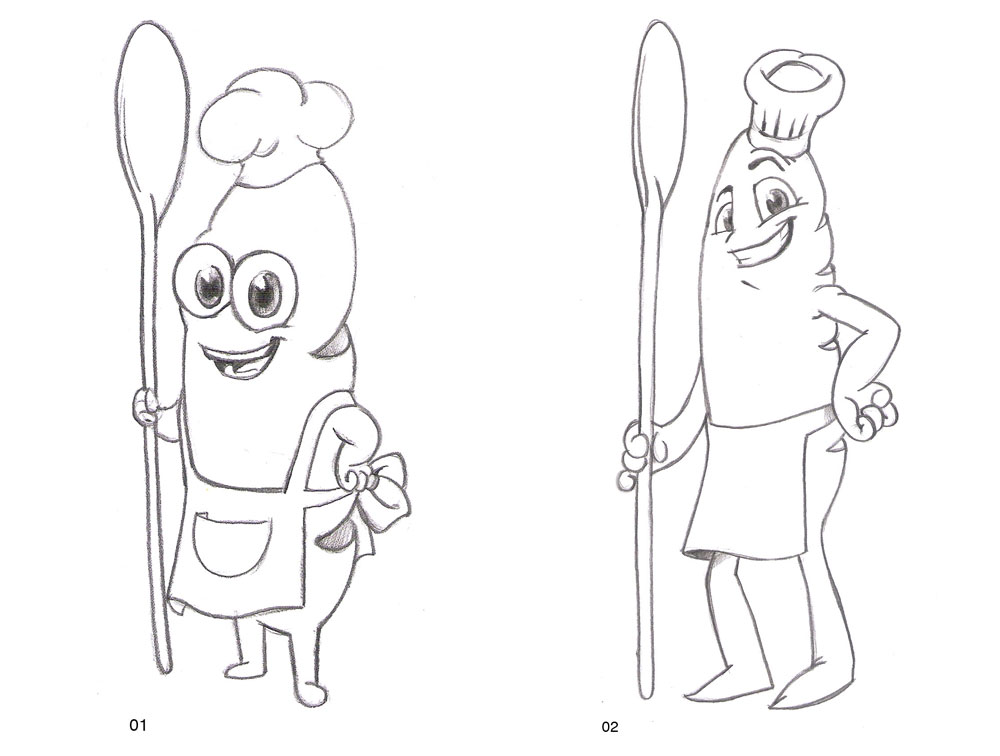
On a lean budget, start by asking your team what people should associate with your brand. Brainstorm visually — sketch, doodle, explore. Get everyone in a room with markers and whiteboards and let ideas flow freely. Then take the strongest concepts to a professional designer. You are not paying them to start from scratch; you are paying them to refine and execute your vision. That is significantly less expensive and produces better results.
Once you have the final logo, get it into vector format so it scales perfectly from a favicon to a billboard. Then use it consistently everywhere — your website, your email signatures, your invoices, your social media profiles. A single great logo used consistently will outperform a dozen mediocre brand assets scattered across your channels.
Strategy 2: Build Recognition Through Community Presence
You do not need a massive advertising budget to build brand awareness. Some of the most effective brand-building happens offline, in your community. Look for events, partnerships, and grassroots opportunities where your brand can be visible and associated with something positive.
On a lean budget, sponsor or participate in local events. Partner with community organizations. Get your team out in branded gear, interacting with real people. The key is choosing opportunities where your presence will generate organic social media sharing. Every parent photographing their kid at your community event is broadcasting your brand to their network for free.
The costs are minimal, but the brand association — your company connected to something people feel good about — is incredibly powerful.
Strategy 3: Create Valuable Content Consistently
Inbound marketing, done right, is far more powerful and cost-efficient than paid advertising. And creating content that builds your brand does not require a production studio.
On a lean budget, start a YouTube channel or podcast. Create how-to guides, behind-the-scenes content, or educational videos. The content does not have to be directly related to your product — what matters is the positive association people make with your brand. A concrete company whose receptionist shares amazing vegan brownie recipes? That kind of unexpected, authentic content gets noticed and shared.
The overall costs are minimal, and you build a library of branded content that compounds over time. People notice novel ideas, and they share content that genuinely helps them.
The secret most startups miss is that content marketing is not about selling — it is about building trust. Every helpful piece of content you produce makes your audience more likely to think of you when they are ready to buy. And unlike paid advertising, good content keeps working for you months and years after you create it.
Free Download
Brand Consistency Checklist
A 27-point checklist to audit your brand across every touchpoint. Used by our team on real client projects.
Success! Check your email for the download link.
Instant PDF download. We'll also send branding tips -- unsubscribe anytime.
The Top Reasons Startups Fail at Branding (and How to Avoid Them)
Having worked with startups for over a decade — even before “startup” became the cool thing to say — we have identified the patterns that consistently lead to branding failure. These are not the obvious ones like bad ideas or lack of funding. These are the subtle killers that do not show up on most founders’ radar because they seem so simple and fundamental.
Reason 1: No Clear Brand Vision
We see it constantly in our brand strategy sessions: we ask founders about their vision and get either a bland, generic phrase or an absurd statement stuffed with superfluous words that mean nothing.
The lack of a proper brand vision is one of the leading causes of startup failure. Your vision is derived from the initial spark that prompted you to start this journey, your core brand values, and your unique value proposition. It is not about big words about changing the world. It is about connecting the dots of why your startup will add value.
To avoid it, go back to Step 1 above. Be honest with yourself. If after reflection you realize your sole purpose is to make money, that is fine — but it will not sustain a brand. Find the deeper “why.”
Reason 2: No Brand Strategy
Every successful business needs a robust brand strategy. Thinking about how your brand should behave in relation to your target market is the essence of brand strategy. Without it, you are guessing.
A real brand strategy covers competitive positioning (understanding your market stage and positioning accordingly), brand promise (the expectation you set and consistently deliver on), pricing strategy (how your pricing reflects your brand’s perceived value), and messaging strategy (communicating what matters to your market consistently and effectively).
Get this wrong and it will be an uphill battle trying to convince the world that your startup deserves to exist.
To avoid it, invest in a brand audit early, even an informal one. Understand how the market perceives you. Get the brand basics right — your value proposition, your brand architecture, your brand experience — before you spend a cent on marketing. And once you commit to a positioning, stick with it through the hard first year. Premature pivoting kills more startups than bad positioning.
Reason 3: No Brand Storytelling
Most startup founders think getting a logo designed is all it takes to communicate visually. Therein lies the problem. Great storytelling relies on creating a brand story and telling that story through a consistent brand identity.
Most startups focus on the wrong things. Their story revolves around features and metrics. They assume the world understands these things and will embrace them. Nothing could be further from the truth.
To avoid it, stop leading with features. Start leading with emotion. Why does your brand exist? What change are you trying to create? Craft a narrative that answers those questions and tell it consistently across every channel.
Reason 4: Trying to Do Everything Alone
Most startup founders start as a one-person operation, and many pride themselves on multitasking. But business is like a work of art — any artist can draw a picture, but only an experienced professional can turn it into a masterpiece. You need a team, even a small one, to build a brand properly.
To avoid it, identify the branding tasks that require specialized expertise — strategy, design, copywriting — and invest in professional help for those. Handle the rest yourself, but do not try to be the designer, the copywriter, and the strategist all at once.
Reason 5: Ignoring Running Costs and Brand Maintenance
Many startups budget for initial brand creation but forget that a brand requires ongoing investment. Your brand needs to be maintained, refreshed, and reinforced over time. The startups that treat branding as a one-time expense are the ones whose brands erode fastest.
To avoid it, build brand maintenance into your operating budget from day one. Even modest ongoing investment in brand consistency, content creation, and touchpoint refinement compounds dramatically over time.
Brand Academy
Learn to Build a Brand from Scratch
The Brand Academy is a hands-on course covering brand strategy, visual identity, product development, and marketing. Created from real client frameworks used at Spellbrand.
Your Startup Brand Launch Checklist
Before you go to market, run through this checklist. Every item matters, and skipping any of them creates a gap that competitors will exploit.
Foundation
- Core values defined and documented
- Mission statement written, tested with outsiders, and refined
- Unique value proposition articulated in one clear sentence
- Brand story crafted with emotional connection, not just features
- Target audience identified with detailed customer personas
Visual Identity
- Professional logo designed in multiple formats (full color, single color, icon)
- Color palette defined with specific hex codes and usage guidelines
- Typography selected (primary and secondary fonts)
- Brand manual created with usage standards and guidelines
- Stationery templates designed (business cards, letterhead, email signatures)
- Social media profiles branded consistently across all platforms
Strategy
- Competitive positioning defined based on market stage
- Brand strategy documented covering positioning, promise, pricing, and messaging
- Brand promise clearly stated and deliverable
- Messaging framework created with consistent tone of voice
- Content strategy outlined for at least the first 90 days
Digital Presence
- Domain name secured and website live with consistent branding
- Social media handles claimed across relevant platforms
- Google Business Profile set up (if applicable)
- Brand monitoring in place to track mentions and sentiment
Legal
- Trademark search completed
- Trademark application filed (or planned)
- Brand assets backed up and organized in a shared repository
Print this list. Tape it to your wall. Do not launch until every box is checked.
We have seen startups rush to market with half these items incomplete, only to spend twice the time and money retrofitting their brand later. The brands that take the time to get this right from day one consistently outperform those that treat branding as something they will “get to eventually.” There is no eventually in competitive markets — there is only now or never.
Frequently Asked Questions
How much should a startup spend on branding?
There is no universal number, but a good rule of thumb is to allocate 10-20% of your initial budget to branding. This covers strategy, visual identity, and the foundational assets you need to go to market. The key is treating it as an investment, not a cost. Startups that skimp on branding spend far more later trying to fix inconsistencies, rebrand, or overcome a weak market presence.
Can I build a brand myself without hiring an agency?
You can handle certain elements yourself — defining your core values, crafting your story, developing your messaging. But for visual identity and strategy, professional help makes a significant difference. The compromise we often recommend: do the strategic groundwork yourself using guides like this one, then bring in a professional designer for logo and visual identity work. That gives you the best of both worlds.
How long does it take to build a startup brand?
A solid brand foundation can be built in 4-8 weeks if you are focused and decisive. The strategic work (values, USP, story, naming) typically takes 2-3 weeks. Visual identity development takes another 2-4 weeks. But remember, building a brand is an ongoing process — the foundation is just the beginning.
What is the difference between brand identity and brand strategy?
Brand identity is the visual and verbal expression of your brand — your logo, colors, typography, and messaging. Brand strategy is the plan behind it — your positioning, target audience, competitive differentiation, and the roadmap for how your brand will grow. You need both. Identity without strategy is decoration. Strategy without identity is invisible.
Should I rebrand if my startup pivots?
Not necessarily. If your core values and mission remain the same, a visual refresh may be all you need. But if your pivot fundamentally changes who you serve or what you stand for, a more comprehensive rebrand is warranted. The key question is: does your current brand still honestly represent what you do and who you do it for?
What is the most common branding mistake startups make?
Treating the logo as the entire brand. Your logo is important — it is the most visible element of your identity. But a brand is the total experience. Startups that obsess over logo design while neglecting strategy, messaging, and consistency are building on a weak foundation. Start with strategy, and let the visual identity flow from it.
When should a startup invest in professional branding versus DIY?
If you are pre-revenue and bootstrapping, start with DIY strategic work and invest in professional design for your logo and core visual assets. If you have secured funding, consider investing in professional brand strategy from the start — it will save you significant time and money down the road. The sooner you get the foundation right, the less you spend fixing it later. Visit our Brand Academy for structured learning resources that bridge the gap between DIY and agency-level work.

Mash Bonigala
Creative Director & Brand Strategist
With 25+ years of building brands all around the world, Mash brings a keen insight and strategic thought process to the science of brand building. He has created brand strategies and competitive positioning stories that translate into powerful and stunning visual identities for all sizes of companies.
Featured Work
See Our Work in Action
Real brands, real results. Explore how we've helped businesses transform their identity.

Client Love
What Our Clients Say
Don't just take our word for it. Hear from the brands we've worked with.

Sue Politte
Success In Focus
"Love it! My brand identity and logo helps quickly communicate what I do. I coach very busy business leaders who want to take their organization to the next level and are tired of all the things that are slowing things down or blocking progress. My brand identity needed to grab visual attention and communicate quickly that I help my clients get focus so they gain and build success. My new brand will help my potential clients identify with me. Thank you!!!!"

Raymond Chen
RLC Global Archicom, Singapore
"SpellBrand was very accommodating from the beginning of the design process even when we had distinct design ideas, being architect designers ourselves. Jeff responded with many preliminary style options based on our initial sketchy ideas, enabling us to zoom in on the specific feel we were looking for. From that point on, it was just refinement and the final logo was in our hands in a matter of days. We have used SpellBrand on other logos for my clients projects."
Related Services You Might Love
Based on what you just read, here are services that can help you achieve similar results for your brand.
Free Download
Brand Strategy Canvas
Map your brand positioning, audience, messaging, and competitive advantage on a single page. Fillable template.
Success! Check your email for the download link.
Instant PDF download. We'll also send branding tips -- unsubscribe anytime.
Keep Reading
Related Articles

Mar 26, 2026
Brand Culture: How to Build an Internal Culture That Amplifies Your External Brand
Your brand is only as strong as the people who deliver it. Learn how to align internal culture with your external brand promise so that every employee interaction reinforces what your marketing communicates.
Read More
Mar 21, 2026
Customer Personas, Buyer Avatars & ICP: The Complete Guide
How we used ideal customer profiling to rebuild Spellbrand after losing 95% of revenue. The frameworks for buyer personas, customer avatars, and ICPs that work in practice.
Read More
Mar 21, 2026
Sales Funnel Mastery: The Complete Guide to Building Funnels That Convert
How to build, optimize, and scale sales funnels that convert strangers into loyal customers. Covers landing pages, email sequences, metrics, and conversion optimization.
Read More