

Spellbrand Blog
Why the Best Brand Names Are Slightly Uncomfortable at First
Every naming project I’ve ever led has had the same moment. We present the shortlist. The room goes quiet. And then someone says it.
“I don’t know… it just feels weird.”
That sentence has killed more great brand names than trademark conflicts, domain issues, and bad design combined. Because in that moment, “weird” gets interpreted as “wrong.” The name gets cut. A safer option takes its place. And six months later, the company launches with a name that nobody hates, nobody loves, and nobody remembers.
After naming 250+ brands since 1998, I can tell you with certainty: the slight discomfort you feel about a strong name is not a warning signal. It is the signal. It means the name is doing something different. And different is the only thing that works.
The names that feel safe in the conference room are the names that evaporate in the market. The names that make you pause, that feel slightly unfamiliar, that provoke a reaction you can’t quite categorize are the names that stick in your buyer’s brain and never leave.
This post is about learning to read that discomfort correctly. Because once you understand what it means, you’ll never kill a great name again.
The discomfort spectrum: what you’re actually feeling
Not all naming discomfort is the same. When a name makes you uncomfortable, your brain is processing one of four distinct signals. Learning to distinguish between them is the difference between choosing a name that works and retreating to a name that’s safe.
Signal 1: Novelty discomfort. The name is unfamiliar. You’ve never heard it before. Your brain has no existing file to slot it into, so it flags the input as uncertain. This is the most common discomfort and the most misread. Novelty discomfort is what you feel when a name is genuinely distinctive. It’s the feeling that precedes every great brand name before the market makes it familiar.
Signal 2: Category violation discomfort. The name doesn’t sound like other names in your industry. It violates the naming conventions of your category. If you’re in financial services and every competitor sounds like “Apex Capital Partners,” a name like Livictus feels wrong because it doesn’t match the pattern. But matching the pattern is exactly how you disappear into the crowd. Category violation discomfort is the brand name moat trying to form.
Signal 3: Identity discomfort. The name doesn’t match how you currently see the company. It feels aspirational, like a suit that’s one size too big. This happens when the name is built for the company you’re becoming rather than the company you are today. It’s the right discomfort. The name is pulling you forward. When we named Brennia for a resort that hadn’t yet opened, the name felt grander than the team’s current reality. Within a year of opening, the resort had grown into the name completely.
Signal 4: Genuine problem discomfort. The name has an actual flaw. It’s hard to pronounce, sounds like something offensive, or creates a real confusion with an existing brand. This discomfort is legitimate and the name should be cut. But this signal is far less common than most people assume. The vast majority of naming discomfort falls into Signals 1-3, which are all indicators of a strong name, not a flawed one.
The skill is telling Signal 4 from the other three. Most founders can’t, which is why they retreat to comfortable names that have none of the good discomfort and all of the bad invisibility.
The names that felt wrong and became worth billions
Every iconic brand name was once a name that made someone in the room uncomfortable. The history of branding is a graveyard of safer alternatives that were chosen instead and forgotten.
Google. A misspelling of “googol” (a math term for 10 to the 100th power). In 1998, this sounded like baby talk. The founding team’s original name was “BackRub,” which at least described the technology. Google sounded like nothing. It felt silly, childish, and completely wrong for a serious technology company. The discomfort was pure Signal 1: novelty. Today the word is a verb in every language on earth.
Slack. A word that literally means laziness, loose, and lack of effort. For a workplace productivity tool. The naming committee at most companies would have eliminated this in round one. “We can’t call a work tool Slack. It sends the wrong message.” That reaction is Signal 2: category violation. Slack violated every naming convention in enterprise software. And that violation is exactly what made it memorable in a sea of names like “TeamConnect” and “WorkHub.”
Uber. A German word meaning “over” or “above,” with associations to Nietzsche’s “Ubermensch” and general pretentiousness. For a car-hailing service. The discomfort was Signal 3: identity. A startup with a handful of cars in San Francisco calling itself “Uber” felt aspirational to the point of arrogance. But the name pulled the company forward. By the time they scaled, the name felt inevitable.
Spotify. Made up. Means nothing. Doesn’t describe music, streaming, or entertainment. Cofounders Daniel Ek and Martin Lorentzon have given conflicting stories about where it came from; one version says Ek misheard something Lorentzon shouted from across the room. The discomfort was novelty: a word with no meaning and no anchor. Today it’s one of the most recognized brand names on the planet.
Häagen-Dazs. Completely invented. Not a real word in any language, including the Scandinavian languages it’s designed to evoke. The founders, Reuben and Rose Mattus, sat at their kitchen table in Brooklyn making up foreign-sounding words. The discomfort was everything: novel, category-violating (ice cream brands were called things like “Good Humor”), and aspirational for a small Brooklyn operation. The fake-European name made the product feel imported and premium, and it worked for decades.
The pattern is undeniable. The names that defined their categories were all uncomfortable before they were iconic. The comfortable alternatives that these names beat in the conference room are names you’ve never heard of.
Why comfortable names fail
If discomfort correlates with success, it follows that comfort correlates with failure. Here’s why.
Comfortable means familiar. Familiar means invisible.
A name that feels comfortable on first hearing feels that way because it sounds like names you already know. “Apex Solutions.” “Blue Harbor.” “Nexus Group.” These names feel right because they match your brain’s existing template for “company name.” They fit the pattern.
But fitting the pattern is the definition of being invisible. When your name sounds like every other name in your category, the buyer’s brain processes it as background noise. There’s no hook, no surprise, no reason to pause and pay attention. The name enters short-term memory and exits within seconds because nothing about it was distinctive enough to trigger encoding into long-term memory.
The psychology behind brand names confirms this at a neurological level. Distinctive stimuli activate deeper cognitive processing. Familiar stimuli get surface-level processing and rapid forgetting. A comfortable name is literally a forgettable name, and every forgettable name is a revenue leak that compounds for as long as you operate under it.
Comfortable means consensus. Consensus means mediocrity.
Comfortable names survive committee voting precisely because they don’t provoke a strong reaction. Nobody objects. But nobody champions them either. They win by not losing, which is the worst possible way to win a naming decision.
This is the naming by committee mistake in its purest form. The most distinctive names on your shortlist get eliminated first because they trigger discomfort in at least one person. Round after round, the field narrows toward the safest, least objectionable, most forgettable option. The winner is the name that nobody hated. Which means it’s the name that nobody will remember.
Comfortable means descriptive. Descriptive means no moat.
The most comfortable names are descriptive ones. “DataSync.” “CloudBridge.” “QuickShip.” They feel right because they tell you what the company does. Zero ambiguity. Zero discomfort.
And zero competitive moat. Descriptive names can’t be trademarked. They can’t dominate search. They can’t survive word-of-mouth transmission because they sound like every other descriptive name in the category. The comfort of a descriptive name is the comfort of building a business on ground you can never own.
Comfortable means you’re naming for yourself, not the buyer
When a name feels comfortable to the founding team, it’s almost always because it makes sense from the inside. It describes the product, references the technology, or captures the founder’s vision. But buyers experience names from the outside. They have no inside context. And from the outside, a comfortable insider name is just another forgettable corporate sound.
Free Download
Brand Consistency Checklist
A 27-point checklist to audit your brand across every touchpoint. Used by our team on real client projects.
Success! Check your email for the download link.
Instant PDF download. We'll also send branding tips -- unsubscribe anytime.
The five types of productive discomfort in naming
Now that you understand why comfort is the enemy, here are the five specific types of discomfort you should lean into rather than away from.
1. “It doesn’t sound like a [category] company”
This is the strongest positive signal a name can generate. If your name doesn’t sound like other companies in your category, it means you’ll stand out in every list, every search result, every competitive comparison, and every buyer’s memory.
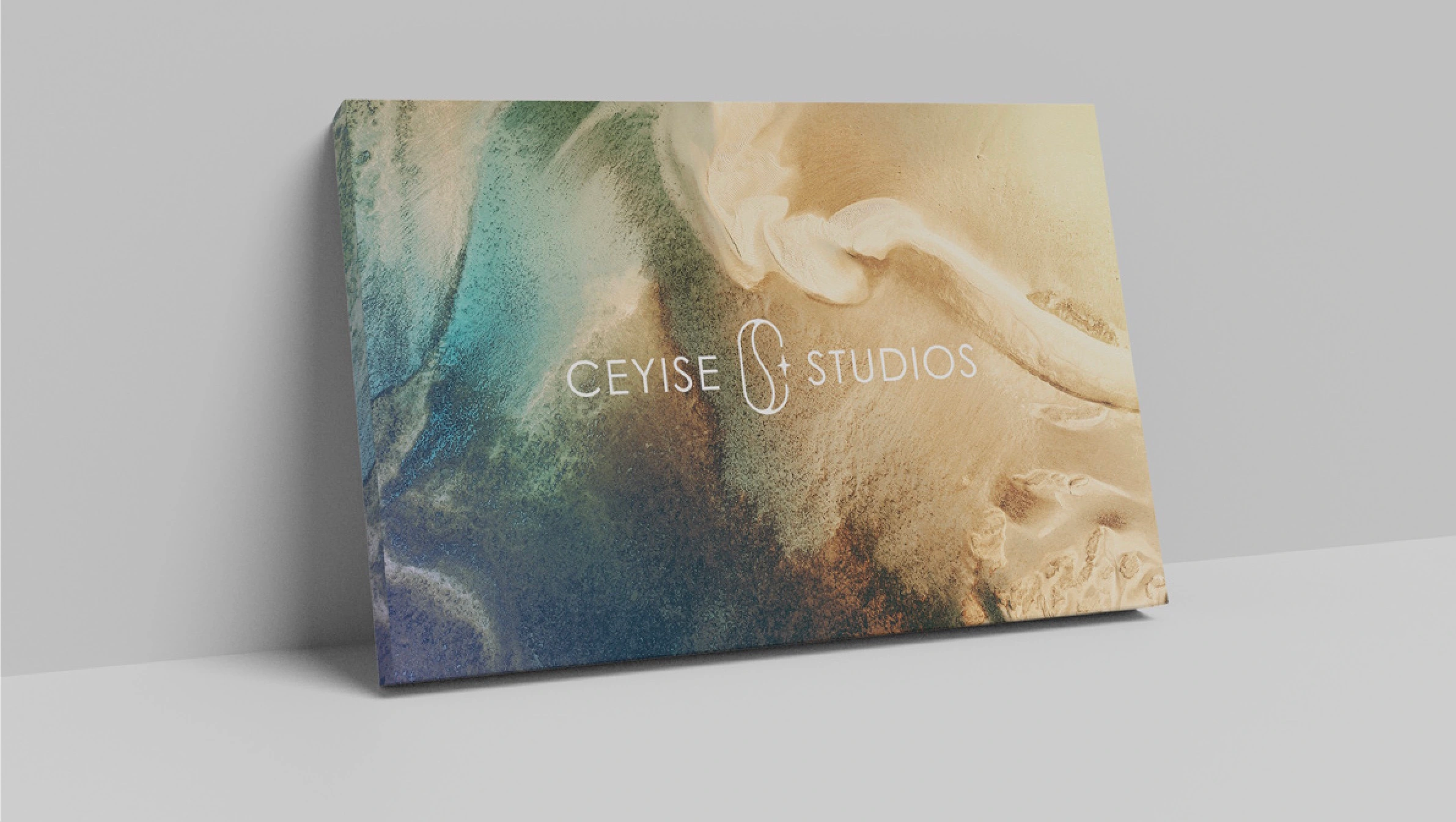
When we presented the name Ceyise for an art studio brand, it didn’t sound like other art businesses. It didn’t follow the “Studio [Noun]” or “[Artist Name] Gallery” pattern. That violation was deliberate. In a world of predictable art brand names, Ceyise sounds like something entirely its own. Buyers remember it because nothing in their mental library matches it, so the brain creates a new file for it instead of merging it with existing entries.
2. “It’s too simple”
Founders who have spent months wrestling with complex technology or sophisticated business models often feel that a simple name doesn’t capture the depth of what they’ve built. “We do so much more than that word implies.”
But simplicity is the highest form of naming sophistication. Apple. Nike. Zoom. Stripe. The most powerful brand names in history are brutally simple. They do one thing: they stick. The product, the marketing, and the customer experience do the rest. If your name feels “too simple,” it’s probably the right length, the right complexity, and the right level of cognitive load for a buyer who has three seconds to process it.
3. “People might not understand what we do”
Good. Your name’s job is not to explain your business. Your name’s job is to be memorable, ownable, and emotionally resonant. Your website explains what you do. Your sales team explains what you do. Your content marketing explains what you do. Your name just needs to be the label that sticks when everything else fades.
The fear that “people won’t understand” is the founder naming instinct at its most destructive. It leads to descriptive names that explain everything and inspire nothing. Amazon doesn’t explain online retail. Virgin doesn’t explain airlines. Apple doesn’t explain computers. The lack of description is the source of power, not a weakness to fix.
4. “It’s too bold for where we are right now”
This discomfort is Signal 3 from the spectrum: identity discomfort. The name feels bigger than the company. It feels presumptuous. “We’re three people in a co-working space. Can we really call ourselves that?”
Yes. You can and you should. Names that match your current scale anchor you to your current scale. Names that feel aspirational pull you toward growth. Every great brand operated under a name that felt too big for its current reality at the moment of naming. That gap between name and reality is the creative tension that drives the team to grow into the name.
5. “Not everyone on the team loves it”
If everyone on your team loves a name, it’s almost certainly too safe. Universal internal approval means the name didn’t provoke a strong enough reaction to be distinctive. The best names split the room. Half the team feels electricity. The other half feels uncertainty. That split is the marker of a name with enough edge to cut through market noise.
The final three decision framework exists partly for this moment. When the room is split, you need structured criteria to evaluate the name objectively rather than defaulting to the option that generates the least objection.
How to tell productive discomfort from genuine problems
The hardest part of this entire framework is distinguishing Signal 4 (genuine problem) from Signals 1-3 (productive discomfort). Here’s a practical diagnostic.
Pronunciation test. Say the name to ten strangers. If eight or more pronounce it correctly on the first try, any discomfort you feel is not a pronunciation problem. If fewer than six get it right, the name has a genuine phonetic flaw. This isn’t about preference. It’s about the referral moat: names that can’t be pronounced can’t be transmitted through word of mouth.
Association test. Say the name to ten strangers and ask: “What’s the first thing that comes to mind?” If the associations are neutral or positive (even if varied), the discomfort is productive. If multiple people independently land on a negative association (offensive meaning, unfortunate similarity to something embarrassing, uncomfortable phonetic resemblance), the name has a genuine problem. Cross-cultural testing matters here too, as we covered in brand naming mistakes to avoid.
Spelling test. Say the name out loud and ask ten strangers to type the URL. If most get it right, the name is clean. If most get it wrong, you have a spelling-pronunciation gap that will leak referrals forever. This is a genuine problem, not productive discomfort.
Category test. Ask strangers what type of company they’d expect from this name. If the category associations are in the right neighborhood (tech, luxury, healthcare, etc.), any discomfort about category fit is just convention-breaking. If people consistently place the name in a completely wrong category, you have a genuine mismatch.
Time test. This is the most reliable diagnostic. Live with the name for 48 hours. If the discomfort grows, the name has a genuine flaw your instincts were right about. If the discomfort fades and is replaced by a growing sense of ownership, the discomfort was novelty, and the name is right.
The ratio in our experience: roughly 80% of naming discomfort is productive (Signals 1-3), and 20% is a genuine problem (Signal 4). Most founders assume the inverse, which is why they kill four strong names for every one they keep.
The 48-hour rule: how discomfort resolves
We’ve tracked this across hundreds of naming presentations. The pattern is remarkably consistent.
Hour 0-4: Peak discomfort. The name is new. It doesn’t feel like “your” name. You keep testing it in your head, saying it silently, imagining it on a business card, and each test produces a slight wince. This is normal. Every name does this at hour zero. Every name.
Hour 4-12: Comparison spiral. You start comparing the name to alternatives. The rejected names start looking better in memory (they always do). You Google the name obsessively, looking for problems. You ask one friend who gives you a lukewarm reaction, which confirms your doubt. This phase is the most dangerous because the doubt feels like evidence.
Hour 12-24: Settling. The initial shock has worn off. The name starts to feel less foreign. You catch yourself saying it naturally in an imaginary conversation. “I’m the founder of [Name].” It still feels slightly odd, but the oddness has shifted from alarming to interesting.
Hour 24-48: Ownership. This is the critical window. If the name is right, somewhere between hour 24 and hour 48, you’ll feel a shift. The name stops being something you’re evaluating and starts being something you own. You stop testing it and start imagining with it. “What would our website look like with this name? What would our conference booth say?” The discomfort has converted into creative energy.
If hour 48 arrives and the discomfort hasn’t shifted, the name is probably wrong. Not because of the discomfort itself, but because the name failed to convert. A genuinely strong name completes the novelty-to-ownership arc within 48 hours. A name that still feels wrong after two full days of living with it has a flaw that repetition won’t fix.
This is why we tell clients never to make the final naming decision in the same session as the presentation. Go home. Live with the names. Let the 48-hour rule do its work. The names that survive the arc are the names that will survive the market. The brands that survive their first year are almost always built on names that felt slightly uncomfortable before they felt inevitable.
The bottom line
The branding industry has a comfort problem. Clients want names that feel right immediately. Agencies want to present names that clients approve quickly. And the result is an endless supply of safe, forgettable, zero-moat names that sound like every other company in the market.
The way out is simple but hard: learn to read discomfort as a signal, not a warning.
The names that build the strongest brands, the names that compound recognition and referral power for decades, the names that create competitive moats no amount of money can breach, are the names that made someone in the room say “I don’t know about this one.” And then the team had the discipline to sit with the discomfort long enough to recognize it for what it was: the feeling of something genuinely different entering a world that rewards sameness with obscurity.
Your next brand name should make you slightly uncomfortable. If it doesn’t, it’s not different enough to matter. And in a market with millions of brands competing for attention, being different enough to matter is the only thing that counts.
Sitting with a name that makes you slightly uncomfortable? That might be the signal it’s right. Score it for free, explore 250+ names we’ve created, or get in touch to talk through the decision with someone who has seen this moment hundreds of times.
Related Services You Might Love
Based on what you just read, here are services that can help you achieve similar results for your brand.

Mash Bonigala
Creative Director & Brand Strategist
With 25+ years of building brands all around the world, Mash brings a keen insight and strategic thought process to the science of brand building. He has created brand strategies and competitive positioning stories that translate into powerful and stunning visual identities for all sizes of companies.
Featured Work
See Our Work in Action
Real brands, real results. Explore how we've helped businesses transform their identity.

Client Love
What Our Clients Say
Don't just take our word for it. Hear from the brands we've worked with.

Liana Alexander Raye
Harlequin Starr International Styles
"Working with the Spellbrand team has been incredibly easy. Mash has a team of experts who are extremely visionary and pioneering, pulling together ideas and initial thoughts into an actual brand giving you options that you feel best align with your thought process. I have no idea how they created my brand based on the vague brief I gave them, but they have worked wonders and magic. Their design, attention to detail, willingness to ensure the final product is exceptional all counts towards a company who has the client at the forefront of mind at every step of the way. Spellbrand is my Number 1 go to for all branding, website and design concepts moving forward. I look at them as an extension to our marketing arm. Just brilliant."

Joe Russell
VALENSOR
"Mash and his team were amazing. They were able to take our vision and produce a truly creative and unique branding package. What struck me most was their desire to make our company happy alongside ensuring our company has good branding. Mash was always willing to answer our questions and help us arrive at a decision. Overall, SpellBrand is not just creating company names and logos, they are creating character and soul for their clients' companies. I would recommend them to anyone looking to stand-out among their competitors. SpellBrand services are most definitely worth their weight in gold."
Related Services You Might Love
Based on what you just read, here are services that can help you achieve similar results for your brand.
Free Download
Brand Consistency Checklist
A 27-point checklist to audit your brand across every touchpoint. Used by our team on real client projects.
Success! Check your email for the download link.
Instant PDF download. We'll also send branding tips -- unsubscribe anytime.
Keep Reading
Related Articles
Mar 26, 2026
The Psychology Behind Brand Names That Stick: Why Some Names Are Unforgettable
Why can you remember some brand names after hearing them once? The cognitive science of sound symbolism, processing fluency, and emotional encoding explains it.
Read MoreApr 27, 2026
Brand Names That Cross Borders: Why Most International Naming Fails and What Actually Works
Most brand names do not survive their first border crossing. After naming brands that operate across 30+ countries, this is why international naming is harder than founders think, what actually goes wrong, and the framework that prevents your name from becoming a punchline in your biggest growth market.
Read MoreApr 17, 2026
Stop Naming Your Brand Like a Founder. Start Naming It Like a Buyer.
Founders name brands from the inside out: what the company does, what the technology is, what the vision means to them. Buyers do not care about any of that. After 250+ naming projects, here is how to name from the buyer's perspective.
Read More