

Spellbrand Blog
Brand Names That Cross Borders: Why Most International Naming Fails and What Actually Works
In 2014, a fast-growing American SaaS company hired us to figure out why their European expansion was stalling. Their product was strong. Their pricing was competitive. Their sales team was experienced. But conversion rates in Germany, France, and Spain were half of what they saw in the US.
The problem was not the product, the pricing, or the team. It was the name.
Their brand name contained a consonant cluster that German speakers found physically awkward to pronounce. In French, the name sounded uncomfortably close to a slang term for something you’d never want associated with enterprise software. And in Spain, the domain they’d chosen was one letter away from a competitor that had been in market for years.
Three countries. Three different failure modes. One name doing the damage.
After naming 250+ brands since 1998, many of them for clients operating across multiple countries, cultures, and languages, I can tell you that international naming failures are not edge cases. They are the default outcome when a name is built for one market and then pushed across borders without testing. And the failures are almost never the spectacular ones you read about in marketing textbooks. They are quiet. They are invisible. They show up as slightly lower conversion rates, slightly longer sales cycles, slightly fewer referrals, compounding across every market where the name does not quite work.
This post is about preventing those failures before they happen.
The three ways names fail at borders
Every international naming failure falls into one of three categories. Understanding the categories is the first step toward avoiding them.
Failure mode 1: Linguistic failure. The name does not work phonetically in the target language. It is hard to pronounce, contains sounds that do not exist in the target language’s phonetic inventory, or creates unintended sound associations. This is the most common failure and the easiest to test for, yet most companies never test.
Failure mode 2: Cultural failure. The name carries meaning, connotations, or associations in the target culture that conflict with the brand’s positioning. The meaning might be directly offensive, subtly negative, or simply confusing. Cultural failures are harder to catch because they require deep local knowledge, not just language translation.
Failure mode 3: Legal failure. The name is trademarked, restricted, or regulated differently in the target market. A name that is legally clear in the US might be owned by someone else in the EU, or might violate naming regulations in markets like China where foreign brand registration follows different rules entirely.
Most companies think about international naming as a translation problem. It is not. It is a three-dimensional problem that requires linguistic, cultural, and legal analysis simultaneously. Missing any one dimension can derail an entire market entry.
The linguistic minefield: sounds that betray you
Every language has its own phonetic inventory: a set of sounds that native speakers can produce and process easily. When your brand name contains sounds outside a target language’s inventory, three things happen, all of them bad.
The name gets mispronounced consistently. English speakers handle “th” effortlessly. French, German, Japanese, and Mandarin speakers do not. If your name contains “th,” every non-English market will pronounce it differently, and your brand will sound different in every country. That is not localization. That is fragmentation.
The name loses its phonetic personality. The psychology behind brand names shows that specific sounds carry specific associations. Hard consonants signal strength. Soft vowels signal warmth. But those associations are not universal. The sound “r” is commanding in English, romantic in French, and aggressive in German. A name that sounds confident in New York may sound harsh in Paris.
The name becomes harder to remember. Processing fluency, the ease with which the brain handles information, drops when a name contains unfamiliar phonetic patterns. In the target market, your carefully crafted name becomes cognitive friction. Every unfamiliar sound is a tiny barrier between the buyer and recall. Multiply that across thousands of impressions and you have a measurable naming debt that accrues exclusively in your international markets.
The sounds that travel well
Not all phonetic structures are equal across languages. Certain sounds exist in nearly every major language and cause minimal friction:
- Bilabial stops (B, P, M): Present in virtually every language. Safe globally.
- Dental/alveolar stops (T, D, N): Broadly universal with minor pronunciation variations.
- Open vowels (A as in “father”): The most universal vowel sound across languages.
- Simple CV syllable structures (consonant-vowel): Languages like Japanese, Spanish, and Italian are built on CV patterns. Names with clean consonant-vowel alternation travel the best.
The sounds that cause problems
- “Th” (voiced and unvoiced): Only common in English, Greek, and Arabic. Most of the world cannot produce it naturally.
- English “R” vs. rolled “R”: Completely different sounds that happen to share a letter. Names built around the English “R” sound different in every market.
- Consonant clusters (str-, spl-, -nkth): Many Asian languages do not permit consonant clusters. Speakers will insert vowels to break them apart, changing your name’s rhythm entirely.
- The English short “I” (as in “bit”): This vowel does not exist in Spanish, Japanese, or many other languages. It gets replaced with “ee,” changing names like “Bitly” to “Beetly.”
When we name brands for international clients, phonetic universality is a core design criterion, not an afterthought. The name has to sound right in every market it will enter, and “right” means pronounceable, natural, and acoustically aligned with the brand’s positioning.
The cultural layer: meaning that shifts beneath you
Phonetics is the surface. Culture is the layer beneath, and it is where the most expensive naming disasters hide.
Connotation drift
A word that carries positive connotations in one culture may carry neutral or negative connotations in another. “Nova” sounds sleek and modern in English (new, star, fresh). In Spanish-speaking markets, “no va” sounds like “does not go.” The Chevrolet Nova story is partly urban legend (the car actually sold fine in Latin America), but the underlying principle is real: words drift in meaning across cultures, and the drift is unpredictable without local expertise.
More subtle examples happen constantly. Color associations embedded in names shift across cultures. White signals purity in Western markets and mourning in parts of East Asia. Red signals danger in some cultures and prosperity in Chinese culture. A name that evokes a specific color association may work perfectly in your home market and create exactly the wrong impression in your growth market.
Religious and historical sensitivities
Names that reference mythology, spirituality, or historical events carry baggage that varies dramatically across cultures. A Greek mythological reference might feel prestigious in Europe and meaningless in East Asia. A name with Buddhist associations might resonate in Southeast Asia and confuse customers in Latin America. A name that sounds regal in English might carry colonial associations in markets with a history of British rule.
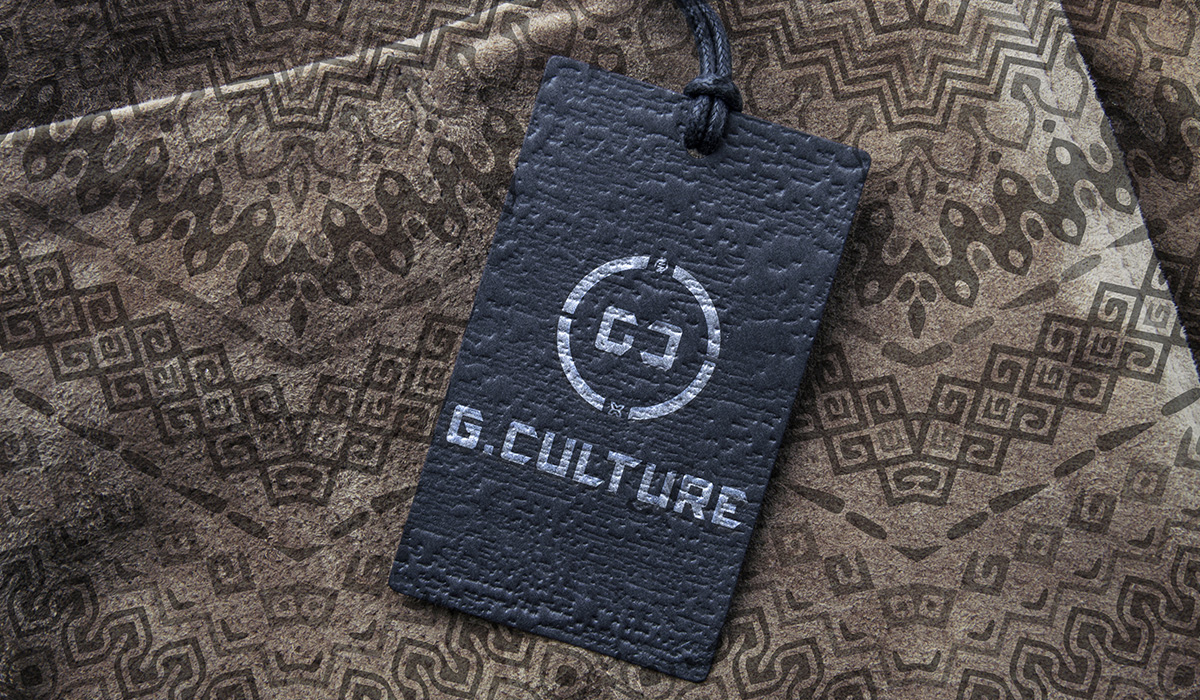
We encountered this directly when naming G.CULTURE for an African streetwear brand operating between New York and West African markets. The cultural bridge had to work in both directions: the name needed to feel authentically connected to African heritage while operating credibly in the American streetwear market. That is not a translation challenge. It is a cultural positioning challenge that requires deep understanding of both sides of the bridge.
Number and letter taboos
In Chinese markets, the number 4 (which sounds like “death” in Mandarin) creates a real business obstacle for any brand name that prominently features it. The number 8 (which sounds like “prosperity”) is actively sought. In Japanese culture, the number 9 can be associated with suffering. In many Western markets, 13 carries superstitious baggage.
Letters carry weight too. In some Arabic-speaking markets, certain letter combinations create unintended word formations when transliterated into Arabic script. In Chinese markets, the characters chosen to phonetically represent a foreign brand name can carry meanings that range from flattering to disastrous, which is why Coca-Cola’s Chinese name (meaning “delicious happiness”) was a deliberate, expert-guided choice rather than a direct transliteration.
The brand naming mistakes that make international headlines are the spectacular ones. But for every Mitsubishi Pajero story, there are hundreds of quiet cultural misfires that never get written about. They just show up as underperformance in markets that should be thriving.
Free Download
Brand Consistency Checklist
A 27-point checklist to audit your brand across every touchpoint. Used by our team on real client projects.
Success! Check your email for the download link.
Instant PDF download. We'll also send branding tips -- unsubscribe anytime.
The legal dimension: trademarks stop at borders
Here is the fact that surprises most founders: a US trademark protects you in the US. That is it. Your name can be legally yours in America and legally someone else’s in every other country you plan to enter.
Trademark law is territorial. Each country (or economic union, in the EU’s case) maintains its own trademark registry. A name that is clear in the USPTO may be registered by a completely different company in the UK, Germany, Australia, Japan, or Brazil. And in many jurisdictions, trademark rights go to whoever files first, not whoever used the name first.
The Madrid Protocol shortcut
The Madrid Protocol allows you to file a single international trademark application that covers multiple countries. It is cheaper and faster than filing separately in each market. But it is not a guarantee. Each designated country still examines the application independently and can refuse registration based on local law.
Many founders do not discover the Madrid Protocol until they have already launched in international markets without trademark protection. By then, a local competitor may have filed first, and the cost of resolving the conflict dwarfs what the initial filing would have cost.
China’s first-to-file system
China deserves special attention because its trademark system is first-to-file, with limited recognition of prior use. This means someone in China can register your brand name as their trademark before you enter the market, and they will own it. Trademark squatting is a well-documented problem for Western brands entering China. If you have any plans to sell in Chinese markets, or if your products might end up there through resellers, file your Chinese trademark early.
The trademark screening process for international names
For any name that will operate across borders, trademark screening should cover:
- USPTO (United States) as a baseline
- EUIPO (European Union) for EU-wide coverage
- UKIPO (United Kingdom, post-Brexit)
- CNIPA (China) if there is any possibility of Chinese market exposure
- Individual country registries for other target markets
- Common law searches in markets where unregistered use can establish rights
This is where professional brand naming earns its fee most directly. A naming investment that includes international trademark screening can prevent a $100,000+ legal conflict later. We include preliminary trademark screening at every package level because we have seen the cost of skipping it too many times.
The international naming framework: how to build names that travel
After naming brands for clients in the US, UK, UAE, India, Maldives, Dominican Republic, China, Canada, Australia, and dozens of other markets, we have developed a framework that consistently produces names capable of crossing borders without breaking.
Step 1: Define your market map before generating names
Before a single name hits the whiteboard, list every market you plan to enter in the next ten years. Not just the markets you are entering now. The markets you might enter. Because renaming for international expansion is one of the most expensive forms of naming debt a company can carry.
If your market map includes only English-speaking countries, your phonetic constraints are relatively mild. If it includes East Asia, your consonant clusters become a problem. If it includes the Middle East, your transliteration options matter. If it includes Latin America, your Spanish-language connotations need screening. The market map determines the linguistic boundaries for every name you will consider.
Step 2: Build the phonetic filter
Based on your market map, create a phonetic filter: a list of sounds that are safe across all your target languages and sounds that are restricted. Every name candidate must pass through this filter before it advances to creative evaluation.
This sounds constraining, and it is. But constraints produce creativity. When you eliminate the sounds that will not travel, you force yourself into phonetic territory that is universally comfortable, and that territory is where the most broadly memorable names live. The names that work everywhere tend to be built from the sounds that exist everywhere.
Step 3: Run cultural screening in parallel with creative development
Do not generate a hundred names and then screen for cultural issues. Screen as you generate. Every name candidate should be evaluated against the cultural context of every target market in real time. This requires either deep multicultural knowledge on the naming team or a network of cultural consultants who can flag issues before the team falls in love with a name that cannot travel.
Step 4: Conduct trademark clearance across all target jurisdictions simultaneously
Do not clear the US first and then check international markets later. Clear everywhere at once. A name that is available in the US but blocked in Germany is not a viable international name. Clearing jurisdictions in sequence wastes time and emotional investment on names that were never globally available.
Step 5: Test pronunciation with native speakers in every target market
The final step before commitment. Find native speakers of every target language and have them pronounce the name cold, with no coaching. Record the results. If the name sounds recognizably consistent across all markets, it is ready. If it fragments into different pronunciations, it is not. Pronunciation consistency is what holds an international brand together. Without it, you are not building one brand. You are building a different brand in every country.
This five-step process adds time and cost to naming. It is one of the reasons that professional naming is worth the investment for any company with international ambitions. The cost of getting it right upfront is a fraction of the cost of discovering the problem after you have launched in three countries with a name that does not work in any of them.
Real examples: names we built to cross borders
Theory is useful. Practice is what matters. The international naming framework plays out in real projects from our portfolio.
Brennia (Maldives luxury resort)
Brennia serves guests from Europe, the Middle East, East Asia, and the Americas. The name needed to work in English, Arabic, German, Chinese, Japanese, and French without negative associations in any of them.
We built the name around universally comfortable phonemes: the “br” onset (safe across all target languages), the open “e” vowel, and the “-ia” suffix (a globally familiar name-ending pattern that signals place and femininity). The result is a name that native speakers of every target language can pronounce correctly on the first attempt, and that carries warm, aspirational associations in every culture we tested.
No consonant clusters that would trip up Japanese speakers. No “th” sounds that would fragment in French. No connotations that would conflict in Arabic-speaking markets. Every phonetic decision was made with the full market map in mind.
Elegore (Indian fashion brand)
Elegore needed to bridge Indian and Western fashion markets. The name combines the English association of “elegant” with a sound structure that works natively in Hindi, Tamil, and other Indian languages.
The “ele” opening sounds natural in both English and Indian languages. The “gore” ending avoids the trap of sounding exclusively Western or exclusively Indian. The full name sits comfortably in both cultural contexts, signaling fashion sophistication without anchoring to either market exclusively. That cultural neutrality is what allows the brand to move between Mumbai and London without changing its identity.
G.CULTURE (African streetwear)
G.CULTURE operates at the intersection of New York streetwear and West African cultural heritage. The naming challenge was different from Brennia or Elegore: instead of cultural neutrality, the name needed to actively bridge two specific cultures.
The “G” initial creates streetwear credibility (short, sharp, initial-based naming is a staple of urban fashion branding). “CULTURE” explicitly claims the cultural positioning. Together, they signal a brand that is rooted in cultural identity rather than generic fashion. The name works because it speaks to both audiences simultaneously: American streetwear consumers hear a brand name that fits the category conventions, while African diaspora consumers hear a brand that centers cultural pride.
SensaCalm (sensory products)
SensaCalm serves families across English-speaking markets primarily, but with growing international demand. The name uses Latin-derived roots (“sensa” from sensory, “calm” from calm) that are recognizable across Romance and Germanic languages.
A parent in the UK, Australia, Canada, or the US reads “SensaCalm” and immediately understands the product’s promise. A parent in France or Spain reads it and, through the Latin roots, grasps the same meaning. The name does not require translation because it is built from linguistic building blocks that predate the modern languages it operates in.
The domestic trap: why “we are not international yet” is a $100K mistake
Here is the objection we hear most often: “We are only in the US right now. We will worry about international naming when we expand.”
This is the most expensive version of naming debt a company can accumulate. This is why.
Renaming for international expansion costs 5-10x more than naming internationally from the start. By the time you are ready to expand, you have built brand equity, customer recognition, SEO presence, and marketing collateral around a name that cannot travel. Renaming means rebuilding all of it. The $5,000 you saved by skipping international testing at launch becomes a $50,000-$100,000 rebrand when you are ready to cross borders.
Markets come to you before you go to them. In a connected economy, your brand reaches international audiences whether you plan for it or not. A customer in Germany discovers your product through a blog post. A distributor in Japan finds you on LinkedIn. A partner in the UAE sees your case study shared on Twitter. Each of these people encounters your name, and if that name does not work in their language, the opportunity dies before you even know it existed.
Investor expectations assume international potential. If you are building a venture-backed company, your investors are evaluating the total addressable market, which almost always extends beyond one country. A name that cannot cross borders signals a ceiling on the business. As we covered in naming a brand that investors take seriously, the name is the first thing investors evaluate, and international scalability is part of that evaluation.
The internet has no borders. Your domain, your social profiles, your content, and your advertising all operate globally from day one. A name that causes problems in Portuguese-speaking markets affects your brand every time a Brazilian user encounters your content, whether you are deliberately marketing to Brazil or not.
The right time to build an internationally viable name is the first time you name the brand. Not the second time. The second time costs ten times more and requires abandoning everything you built under the first name. Every company that “waited until expansion” to fix their name wishes they’d done it at launch.
The bottom line
A brand name that works in one language, one culture, and one legal jurisdiction is not a brand name. It is a domestic label with an expiration date. The moment your business touches a second market, a second language, or a second culture, the label breaks.
Building names that cross borders requires a fundamentally different process than building names for a single market. It requires phonetic analysis across language families, cultural screening across value systems, legal clearance across jurisdictions, and pronunciation testing with native speakers. That process is more complex, more time-consuming, and more expensive than domestic naming. It is also a fraction of the cost of discovering, two years into your international expansion, that your name is holding you back in every market you have entered.
The brands that dominate globally did not get there by fixing naming problems after expansion. They got there by building names as competitive moats from day one, names engineered to travel, to stick, and to compound recognition across every market they touch.
Your next market is closer than you think. Name accordingly.
Building a brand that needs to work beyond one market? Score your current name for free, explore 250+ names we have created across dozens of countries, or get in touch to discuss international naming for your brand.
Related Services You Might Love
Based on what you just read, here are services that can help you achieve similar results for your brand.
Mash Bonigala
Creative Director & Brand Strategist
With 25+ years of building brands all around the world, Mash brings a keen insight and strategic thought process to the science of brand building. He has created brand strategies and competitive positioning stories that translate into powerful and stunning visual identities for all sizes of companies.
Featured Work
See Our Work in Action
Real brands, real results. Explore how we've helped businesses transform their identity.
Client Love
What Our Clients Say
Don't just take our word for it. Hear from the brands we've worked with.

Liana Alexander Raye
Harlequin Starr International Styles
"Working with the Spellbrand team has been incredibly easy. Mash has a team of experts who are extremely visionary and pioneering, pulling together ideas and initial thoughts into an actual brand giving you options that you feel best align with your thought process. I have no idea how they created my brand based on the vague brief I gave them, but they have worked wonders and magic. Their design, attention to detail, willingness to ensure the final product is exceptional all counts towards a company who has the client at the forefront of mind at every step of the way. Spellbrand is my Number 1 go to for all branding, website and design concepts moving forward. I look at them as an extension to our marketing arm. Just brilliant."
Christian Nocera
Dapper Yankee
"Delighted to have used Spellbrand for our last project. The work was thorough and results excellent. For me it was such a pleasure to work with Mash who was able to keep up with all my last minute requests for small changes. Nothing was too much of a problem and I would have to say that its great to work with people who do actually put the customer needs first! One thing saying it, its another thing doing it – Thanks Mash!"
Related Services You Might Love
Based on what you just read, here are services that can help you achieve similar results for your brand.
Free Download
Brand Consistency Checklist
A 27-point checklist to audit your brand across every touchpoint. Used by our team on real client projects.
Success! Check your email for the download link.
Instant PDF download. We'll also send branding tips -- unsubscribe anytime.
Keep Reading
Related Articles
Apr 7, 2026
How to Name a Brand That Investors Take Seriously
Your brand name is your first pitch. After naming brands that have collectively raised over $50M in funding, this is how the name influences investor perception and what founders get wrong.
Read MoreApr 4, 2026
The Hidden ROI of a Great Brand Name: How Naming Pays for Itself 10x Over
Brand naming isn't an expense. It's an investment with measurable returns across sales, marketing, hiring, and valuation. After 250+ naming projects, here's exactly how a great name pays for itself.
Read MoreApr 3, 2026
When to Kill Your Brand Name (And How to Rename Without Losing Everything)
Your brand name might be holding you back. After renaming dozens of established businesses, we identified the 6 signs it is time to let go and the process that protects equity you have already built.
Read More