

Spellbrand Blog
The Complete Brand Audit: How to Evaluate Every Dimension of Your Brand

You cannot fix what you cannot see.
Most businesses operate with a vague sense that their brand “could be better” but no precise understanding of where the problems live. They redesign the logo when the real issue is messaging. They rewrite the website copy when the real issue is visual inconsistency. They spend on advertising when the brand experience breaks the promises their marketing makes.
A brand audit eliminates the guesswork. It is a systematic evaluation of every dimension of your brand that reveals exactly where you are strong, where you leak value, and where the highest-impact improvements hide.
After auditing brands for 2000+ clients across 50+ countries, I can tell you this: every brand has blind spots. The ones that grow fastest find those blind spots before their competitors exploit them.
Why most brand audits fail
Before we build the framework, let’s address why most audit attempts produce nothing useful.
They audit only what is visible. Checking whether your logo is consistent across platforms is necessary but insufficient. A real audit examines the strategy beneath the surface, the gap between intention and perception, the alignment between what you say and what customers experience.
They lack a scoring system. “Our brand could be more consistent” is an observation, not a diagnosis. Without quantified scores, you cannot prioritize. Without prioritization, you fix whatever feels urgent rather than whatever matters most.
They skip the customer perspective. An internal audit tells you what you think your brand is. Only customer research tells you what your brand actually is in the minds of the people who pay you. The gap between those two, what we call the brand perception gap, is where the most valuable insights live.
They stop at diagnosis. An audit that identifies problems but does not rank them by impact and effort is a list of complaints, not a strategic tool. Every finding must connect to a recommendation, and every recommendation must connect to a business outcome.
The seven dimensions of a brand audit
A thorough brand audit evaluates seven interconnected dimensions. Each one reveals a different layer of your brand’s health, and each one connects to the others in ways that a partial audit would miss.
Dimension 1: Brand strategy foundation
This is the bedrock. If the strategy is unclear or misaligned, nothing built on top of it will work properly.
Start by asking whether your team can articulate why your brand exists beyond making money. Is this purpose genuinely motivating, or is it corporate wallpaper? Check it against your core brand purpose.
Then look at positioning. Is your market position clearly defined, differentiated, and defensible? Could a competitor claim the same position with equal credibility? A strong position should make you the obvious choice for a specific audience. Review your brand positioning strategy for the standard.
Target audience clarity matters more than people think. Can everyone in your organization describe your ideal customer with specificity? Not “small business owners” but “B2B SaaS founders with 10-50 employees in the growth stage who have raised Series A.” Build or revisit your customer personas.
Look at your value proposition. Is what you offer clearly different from and better than alternatives for your specific audience? Or could ten competitors say the same thing? Revisit your brand value proposition.
If you have multiple products, services, or sub-brands, is the relationship between them clear to customers? Or does your brand architecture create confusion?
Rate each element on clarity, differentiation, and internal alignment from 1 to 10. A score below 7 on any element means your brand is building on a cracked foundation.
Dimension 2: Visual identity system
Your visual identity is processed before anything else. It creates the first impression that colors every subsequent interaction.
Does your logo work at all sizes, on all backgrounds, in all required formats? Is it distinctive enough to be recognized without the company name? Does it hold up against competitive logos without looking generic?
Are your brand colors defined with precision (hex, RGB, CMYK, Pantone)? Do they reproduce consistently across digital and print? Does the color psychology align with your brand personality?
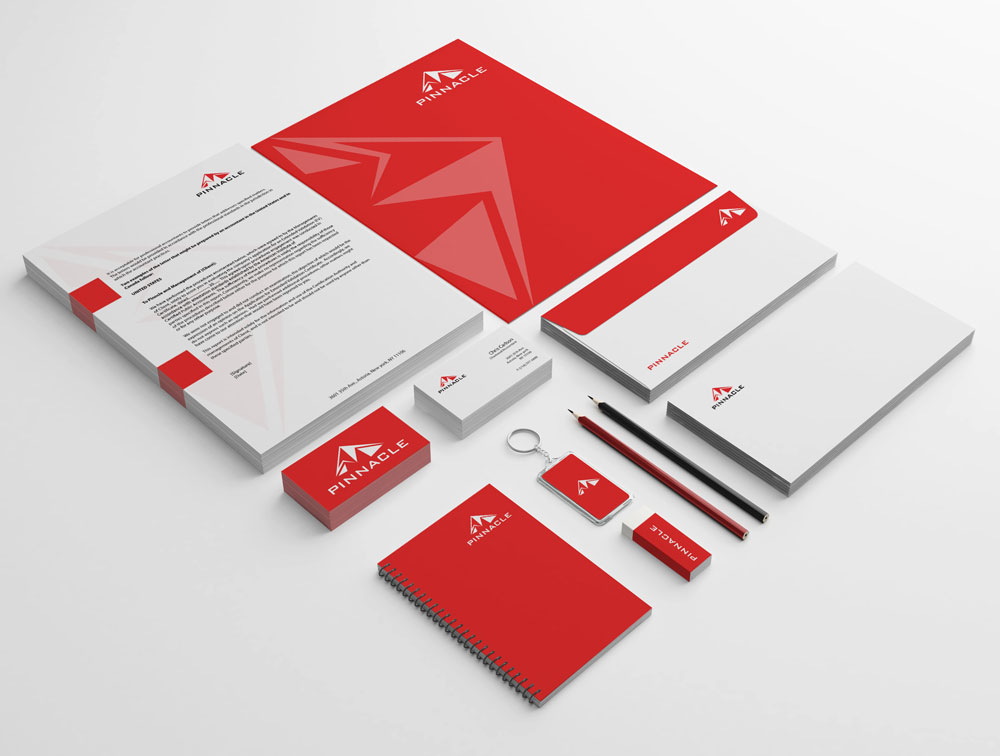
Pull up your website, social media profiles, most recent email campaign, latest presentation, and business card. Lay them side by side. Do they unmistakably look like the same brand? This is where brand collateral design makes or breaks consistency.
Check your photography and imagery direction. Do you have a defined image style? Is it consistently applied? Does the imagery support your brand personality and appeal to your target audience?
Rate overall system quality, consistency of application, and competitive distinctiveness from 1 to 10. See our guide on the brand identity design process for what the standard should look like.
Dimension 3: Brand messaging and voice
What your brand says and how it says it determines whether the right people pay attention and the wrong people filter themselves out.
Read your homepage, about page, and primary service page. In each case, can a first-time visitor understand what you do, who you do it for, and why they should care within ten seconds? If not, your brand messaging framework needs work.
Pull copy from five different touchpoints: website, social media, email, a proposal, and a customer-facing document. Does the voice feel like the same person wrote it? Or does the brand sound professional on the website, casual on social media, and generic in emails?
Then read your copy alongside your three closest competitors’. Could you swap the company names without anyone noticing? If yes, your messaging is commodity-level.
Does your messaging use the language your customers actually use? Or does it rely on internal jargon and industry terms that mean more to your team than to your buyers? At every touchpoint, is it obvious what the visitor should do next? Ambiguity at the moment of action kills conversion.
Rate clarity, distinctiveness, consistency, and conversion effectiveness from 1 to 10.
Dimension 4: Digital presence
Your digital presence is your brand for most people. They will interact with your website, social profiles, and digital content far more than any physical touchpoint.
Start with website performance: load speed, mobile responsiveness, navigation clarity, accessibility compliance. Technical performance is a brand trust signal. A slow, broken website says the brand does not care about details.
Check your SEO health. Are you visible for the search terms your ideal customers use? Is your content strategy attracting the right traffic or just any traffic?
Look at your social media profiles. Do they visually and tonally match your brand? Is the content strategy consistent with your positioning, or does it chase whatever trends are popular this week?
Sign up for your own newsletter. Request information through your own contact form. How does the automated response look? How fast does a human follow up? Every email is a brand moment.
Then Google your brand name. What appears? Are review profiles claimed and managed? Is the sentiment consistent with your brand promise?
Rate overall quality, brand consistency, and competitive comparison from 1 to 10.
Dimension 5: Customer experience
Brand experience is where promises are kept or broken. It is the gap between what your marketing says and what your operations deliver.
Walk through every step a customer takes, from first discovering your brand to post-purchase. Where does the experience feel premium and intentional? Where does it feel generic or broken?
Is the quality of interaction consistent across channels? Or is your sales process polished but your onboarding chaotic? A single weak link devalues every strong one. Read more about brand experience for business growth.
List the top five promises your marketing makes. Rate how well operations actually delivers on each one. The gap is your brand credibility risk and a leading indicator of future brand crises.
Look at customer feedback patterns. What do customers consistently praise? What do they consistently flag as needing improvement? The patterns reveal the true brand experience, not the intended one.
Mystery-shop your competitors. How does their customer experience compare to yours at each stage?
Rate promise-delivery alignment, touchpoint consistency, and competitive standing from 1 to 10.
Dimension 6: Competitive positioning
Your brand does not exist in a vacuum. Its strength is always relative to the alternatives available to your target audience.
Map your top five to ten competitors on two axes that matter most to your audience: price vs. quality, speed vs. thoroughness, innovative vs. established, or whatever dimensions your market uses to make decisions.
Look for whitespace. Where is the gap in the market that no competitor owns? Are you positioned in that gap, or are you clustered with everyone else in the safe middle?
Compare your visual identity to competitors side by side. Do you stand out or blend in? Could a customer confuse your brand materials with a competitor’s?
How visible is your brand relative to competitors in your key channels: search, social media, industry publications, events?
Is your competitive advantage based on something difficult to copy, like brand trust architecture, community, or accumulated expertise, or something competitors could replicate in months? Build toward a brand moat.
Rate positioning clarity, differentiation strength, and market visibility from 1 to 10.
Dimension 7: Internal brand alignment
A brand is only as strong as the people who deliver it. Internal alignment determines whether the brand promise survives contact with the customer.
Ask ten employees: “What does our brand stand for?” If you get ten different answers, you have an alignment problem. The team should articulate the brand purpose, positioning, and values consistently.
Does the internal culture reflect the external brand? A brand that promises innovation but operates with rigid bureaucracy is at war with itself. A brand that promises warmth but treats employees poorly will eventually be exposed.
Do teams actually use the brand guidelines? Or do they sit in a shared drive, unopened since the day they were delivered? Guidelines that are not used do not exist.
Does the brand feel the same when a customer interacts with marketing, sales, customer service, and billing? Or does each department operate as if it belongs to a different company?
Do leaders model the brand values? Employees watch what leaders do far more than they read what the brand guidelines say.
Rate understanding, alignment, adoption, and consistency from 1 to 10.
The scoring matrix
After evaluating all seven dimensions, consolidate your scores into a single view.
| Dimension | Score (1-10) | Priority |
|---|---|---|
| Brand Strategy Foundation | ||
| Visual Identity System | ||
| Brand Messaging and Voice | ||
| Digital Presence | ||
| Customer Experience | ||
| Competitive Positioning | ||
| Internal Brand Alignment | ||
| Total | /70 |
56-70 means your brand is a competitive weapon. Focus on maintaining and incrementally improving.
42-55 means a strong brand with specific vulnerabilities. Address the lowest-scoring dimension first because it is likely dragging down the others.
28-41 means your brand is leaving significant revenue on the table. Multiple dimensions need attention, starting with Strategy Foundation and Visual Identity, because everything else depends on those two.
Below 28 means your brand is actively working against you. A foundational brand strategy and identity redesign should be your top business priority.
Fix the lowest-scoring dimension first, unless Brand Strategy Foundation scores below 5. In that case, fix strategy first regardless of other scores, because strategy is the foundation everything else is built on.
How to run the audit
Week 1: Internal assessment
Gather your leadership team and key stakeholders. Work through each dimension using the criteria above. Be honest. The purpose of an audit is diagnosis, not self-congratulation.
Collect all brand assets, marketing materials, website analytics, customer feedback, employee surveys, and competitive intelligence. Score each dimension collaboratively. Where scores diverge between team members, that disagreement itself is a finding. It reveals internal misalignment.
Week 2: Customer research
The internal assessment tells you what you think. Customer research tells you what is true.
Run 5-10 deep conversations with current customers about their experience of your brand. What drew them in? What surprised them? What nearly drove them away?
Talk to 3-5 lost prospects who considered your brand but chose a competitor. Why? What was the deciding factor? This is often the most valuable data.
Send a quantitative survey to 50+ customers to validate the themes from interviews. Score brand attributes and compare intended positioning to perceived positioning. Check social media for what people say about your brand unprompted. The language customers use to describe you reveals your true brand position.
Week 3: Competitive analysis
You cannot evaluate your brand in isolation. Strength is relative.
Do a side-by-side comparison of all brand identities in your competitive set. Read every competitor’s homepage, about page, and key service page. Mystery-shop the top three competitors through their full customer journey. Compare search visibility, social engagement, content quality, and review sentiment.
Week 4: Synthesis and strategy
Combine internal assessment, customer research, and competitive analysis into a unified picture.
Update your scoring matrix reflecting all three data sources. Map the distance between intended brand and perceived brand for each dimension. Identify where the largest gaps between your brand and customer expectations represent the highest-impact improvements. Rank the three to five changes that will move the needle most by impact and effort. Estimate the resources needed for each: time, budget, expertise.
Common findings and what they mean
After conducting hundreds of brand audits, these are the patterns I see most frequently.
“Our visual identity is inconsistent” means your brand lacks a proper identity system. Individual pieces may look fine, but they do not work as a family. The fix is not tweaking. It is building a brand identity system with guidelines that ensure consistency as the brand scales.
“Our messaging sounds like everyone else” means your brand positioning is unclear or too broad. When you try to appeal to everyone, your messaging becomes generic by necessity. The fix starts with sharper brand positioning, which then informs distinctive messaging.
“Customers love us, but prospects don’t know we exist” means your brand has experiential credibility but low visibility. You deliver well but do not communicate well. The fix is investing in content, visibility, and brand awareness using your satisfied customers’ language and stories.
“Our team describes the brand differently” means internal alignment is broken, usually because brand strategy was never clearly defined or properly cascaded through the organization. The fix is a strategy reset followed by internal training, accessible brand guidelines, and a deliberate brand culture alignment effort.
“We look dated compared to competitors” means your brand identity has not evolved with the market. Visual identity has a shelf life of five to seven years before it starts feeling stale. The fix is a strategic brand refresh that modernizes the visual system while preserving the brand equity you have built.
When to audit
Run a lightweight audit annually to catch drift before it becomes a problem.
Audit before major investments: a rebrand, new market entry, fundraising round, or major campaign. You need to know your starting point before you plan the journey.
Audit after significant change: new leadership, a merger, market shifts, competitive disruption, or rapid growth. Any of these can create misalignment that an audit reveals.
And audit when growth stalls. If your business has plateaued despite solid operations, the problem is often brand-related. An audit pinpoints whether the issue is positioning, messaging, experience, or visibility.
The audit is the beginning
A brand audit is not a project. It is the starting point for strategic action. The value lies not in the scores but in what you do with them.
Block four hours this week. Gather your brand materials. Walk through Dimension 1, Brand Strategy Foundation, using the criteria above. Score it honestly. If the score surprises you, that surprise is the audit already delivering value.
If you want a professional perspective from someone who has audited hundreds of brands, let’s talk about your brand. We conduct brand audits that map the fastest path from where your brand is to where it needs to be.

Mash Bonigala
Creative Director & Brand Strategist
With 25+ years of building brands all around the world, Mash brings a keen insight and strategic thought process to the science of brand building. He has created brand strategies and competitive positioning stories that translate into powerful and stunning visual identities for all sizes of companies.
Featured Work
See Our Work in Action
Real brands, real results. Explore how we've helped businesses transform their identity.

Client Love
What Our Clients Say
Don't just take our word for it. Hear from the brands we've worked with.

Jenny Richard
Woods Of Fairfax
"Working with the team at Spellbrand has been fantastic! I spent time researching companies that would help me build brands for each asset that are all in different locations and more specifically build a brand that could help tell each of their unique stories. Spellbrand did just that. The process was easy. To provide them with my initial thoughts through a nicely-outlined input form they sent to me and they took that information and created a number of awesome designs. I was able to incorporate "the story" easily with a design we selected. I'm excited to get it into action and see what's in store for the next project. Also, each person I worked with has been super responsive, knowledgeable, and awesome to work with! Kudos to Mash, Mike, and Eva! I really enjoy working with you!"

Christian Nocera
Dapper Yankee
"Delighted to have used Spellbrand for our last project. The work was thorough and results excellent. For me it was such a pleasure to work with Mash who was able to keep up with all my last minute requests for small changes. Nothing was too much of a problem and I would have to say that its great to work with people who do actually put the customer needs first! One thing saying it, its another thing doing it – Thanks Mash!"
Related Services You Might Love
Based on what you just read, here are services that can help you achieve similar results for your brand.
Free Download
Brand Consistency Checklist
A 27-point checklist to audit your brand across every touchpoint. Used by our team on real client projects.
Success! Check your email for the download link.
Instant PDF download. We'll also send branding tips -- unsubscribe anytime.
Keep Reading
Related Articles
Apr 23, 2026
The Naming Debt: What Happens When You Launch With a Placeholder and Never Replace It
Most companies launch with a placeholder name and never replace it. Naming debt accumulates silently across five channels, compounding every year while the cost of fixing it stays flat.
Read MoreApr 20, 2026
Why the Best Brand Names Are Slightly Uncomfortable at First
The names that feel safe in the boardroom are the names that disappear in the market. After naming 250+ brands, here's why the slight discomfort you feel about a great name is actually the signal that it's working.
Read MoreApr 17, 2026
Stop Naming Your Brand Like a Founder. Start Naming It Like a Buyer.
Founders name brands from the inside out: what the company does, what the technology is, what the vision means to them. Buyers do not care about any of that. After 250+ naming projects, here is how to name from the buyer's perspective.
Read More