

Spellbrand Blog
Brand Expression: Your Share Of Millennial Buying Power

Brand expression is a somewhat ephemeral topic that many entrepreneurs gloss over in favor of moving on to the more concrete aspects of their startup. But if you take the time now to work on your brand messaging, it will pay dividends in the long run.
This article covers what brand expression is, why emotional impressions matter, the difference between voice and tone, and how to create brand personality. Then we will explore the three cornerstones of brand expression and how to get off on the right foot with all three.
What is Brand Expression?
It is more important than ever to understand the difference between brand expression and brand experience. Brand expression is composed of anything you put out there, from advertisements to blog posts. It is your chance to say, This is who we are. You have a great deal of control over brand expression, and you should take full advantage of that.
Today, consumers are more observant—and more cynical—than they have ever been. They actively watch for discrepancies between what a company says and what that company does. Therefore, if you want to claim your share of that sweet, sweet Millennial buying power, you will need to ensure that your messaging is on point.
Brand expression is a multidisciplinary practice that combines brand strategy and brand identity. The brand strategy half of the equation is, basically, how you define your brand. The brand identity component, meanwhile, involves how you articulate and communicate your values, vision, and mission.
To accomplish this, you will design and publish several multi-sensory assets, such as advertisements, brochures, web pages, etc. These assets, including core components such as logo, website, and characteristic typography, should convey your core purpose.
In other words, brand expression is the communication of brand personality, mission, promise, values, and voice.
While this does involve selecting colors, shapes, and typographies to represent your brand visually, it is more than that, as we shall see. Brand expression is like a language or music. It speaks to people. For this reason, one of the key aspects of brand expression is consistency_._
The choices you make starting out should reflect everything you stand for as a brand. Your goal is to integrate these facets of your company identity into a cohesive, authentic messaging platform that is germane to who you are.
If this sounds lofty, or abstract, do not worry. We will get down to brass tacks in a moment.
The bottom line is this: if your brand is dedicated to, say, personal service, then your brand expression should exude warmth and accessibility. If, on the other hand, you are all about reliability, then you might offer more distant or stoic discourse.
Personal service: Dove.
Reliability: Cisco.
Think of the differences in messaging between these two companies.
Visual elements of messaging, such as photography and video, are becoming more important. Both of the above companies utilize visual elements in their messaging, but the way they employ these tools is vastly different.
For instance, Cisco is likely to use video to summarize the results of a case study or demonstrate a new networking technology. Dove, on the other hand, is more likely to engage in social media to drive engagement, and they would use either photos or video to achieve that goal.
In either case, however, both companies use the available tools to craft messages that help them convey their brand messaging.
We can see, then, that brand expression is all about context.
As with most things, a shotgun approach is not the best idea. Do not post on Instagram just because you can. If you do not sell a product that lends itself to visual media, do not invest a lot of time into Pinterest.
The more you inject intention into brand expression, the faster you will build brand awareness.
 The Importance of Intentional Emotional Impressions
As mentioned, one way to express yourself as a brand is to nail the visual elements of your branding down early. It is important to note, also, that the visual choices you make will create emotional impressions in your target audience.
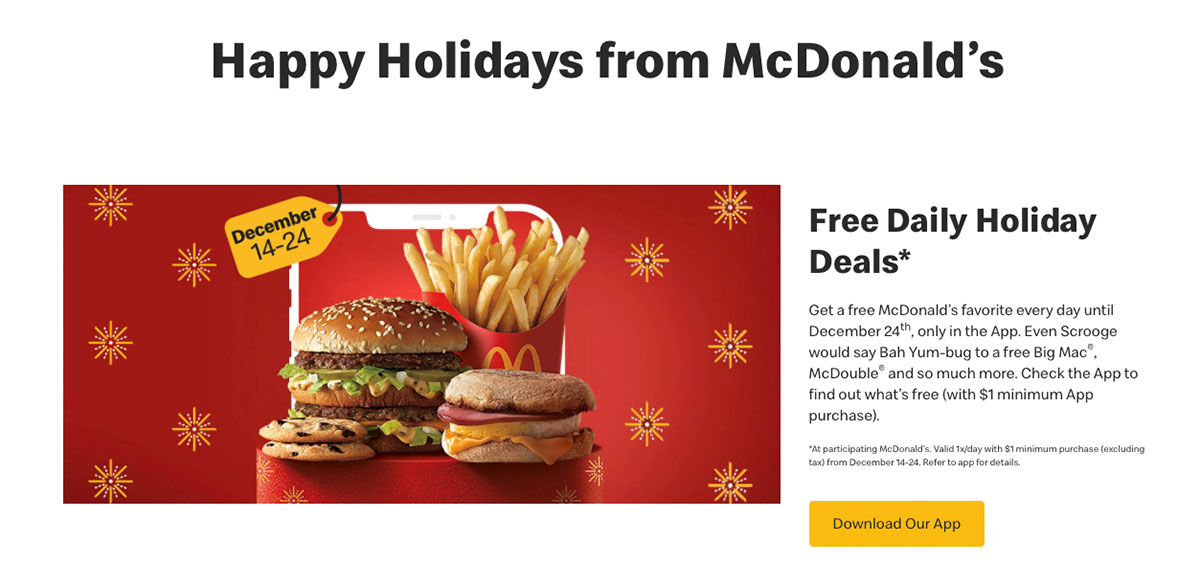
The classic example of this is, of course, is McDonald’s. Early on, the corporation did research that suggested that the colors red and yellow increased appetite. Whether this holds up today or not is unclear. What is clear, however, is that red and yellow are much, much more noticeable than, say, blue or green.
Indeed, in nature, the fruit is often brightly colored in order to attract animals. Plants rely on animals to spread the seeds contained within the fruit.
Similarly, McDonald’s uses the colors red and yellow to attract your attention.
The point is this: these brand colors were not chosen arbitrarily. The company used them with intention. The result? McDonald’s branding is immediate, impactful, and irrevocably embedded in pop culture.
What emotional impressions surface for consumers when they view this branding? Let us consider a few.
Quick, decent-tasting food is the first impression. No one expects McDonald’s to taste like a Michelin Star restaurant. But they do expect to feed their families quickly. The emotion: contentment. Then there is going home again. For many, fast food is a nostalgia trip, reminding them of years past when they did not have the money to eat at fancier establishments. The emotion: nostalgia. And levity. McDonald’s works hard to provide a fun environment for children and parents alike. Play areas let children play within view of parents, and they were one of the first restaurants to add free Wi-Fi. The emotion: happiness.
So, when you set about deciding on brand expression, consider how the visual elements of that expression will impact things. Will your intended brand colors, fonts, and other elements help or hinder the overall message you want to convey?
Voice & Tone
If the brand expression is a toolkit with which you can communicate with the public, voice and tone are two essential tools within that kit.
Your voice denotes the style in which you communicate with consumers. This includes written communicates as well as aural and covers everything from radio spots to your blog.
The way you speak, and the words you choose to use, say a lot about you as a brand.
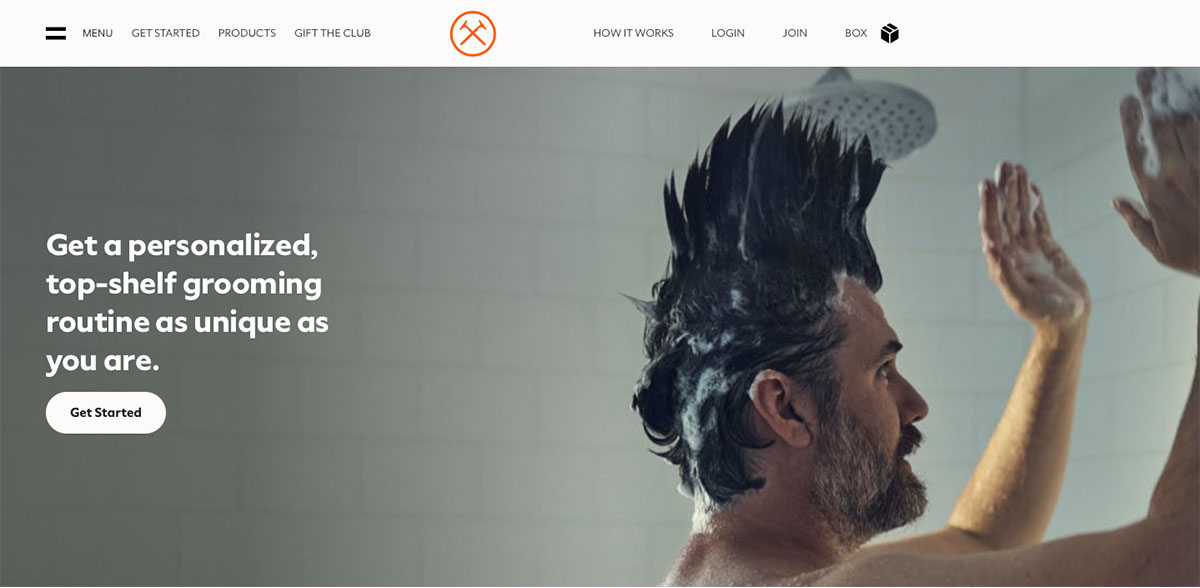
Consider Dollar Shave Club.
What are they saying about themselves when they say, “Our blades are f##king great.” Who are they trying to attract? Who are they appealing to?
When considering your voice, keep this in mind: You will want to keep it consistent over the years. So pick a voice you can stick with.
Tone is the creative manifestation of your messaging. You can also think of it as a theme. Think back to Dollar Shave Club, or watch this one minute and thirty-three-second ad for reference. What are they saying with this ad? What is the tone?
The explicit message is, We make good blades. And we send them to your door.
But the tone of the ad is, Hey, we_‘re cool. Just like you. Give us a shot._
GoDaddy, Uber and Red Bull are also masters of theme and are worth your study.
Again, the key here is consistency. If Dollar Shave Club released ads that focused on the benefits of their product or the unique selling points, but without the personality displayed in the above ad, consumers would be confused, if not outright put off.
Growth Drivers of Brand Messaging
Brand messaging, or expression, has four primary growth drivers:
- Build your company culture around your ideal
- Make sure employees are aware of and are steeped in, that ideal
- Bring customer experience into alignment with that ideal as much as possible
- Evaluate your progress towards that ideal on a regular basis and readjust where necessary
If you do these five things, your brand will grow as if on autopilot.
The 3 Cornerstones of Brand Expression
In this section, we will explore the three cornerstones of brand expression. These are:
- Brand persona
- Communication
- Visual Expression
Every piece of content you publish tells potential customers something about you. This includes ads, brochures, white papers and just about anything else you can think of. It is important to infuse these documents with personality—the personality of your brand.
This is particularly true if you engage in content marketing. Readers will come back to your blog once they recognize you as an authority, but in order for them to stay long enough for that to happen, you will have to grab—and hold—their attention.
Your brand persona is made up of personality traits, values, and attitudes. Understanding the twelve brand archetypes can help you define these traits more clearly and connect with your audience on a deeper level. You should showcase these facets of personality strategically in order to shape public perception of your brand.
Your brand persona can affect whether a potential customer clicks a call-to-action, fills out a form or makes a purchase. So it is best to create your persona on purpose, instead of allowing it to form of its own accord.

The Fight For Personality
We are sure you have read all about how Millennials are coming into their purchasing power, and about how they demand more social awareness from corporations than did earlier generations. But they also demand personality.
This is one reason we are seeing startups like Dollar Shave Club using marketing angles that may have been considered unfathomable in the ’80s or even ’90s.
As a general rule, to compete in the current market, you will need as many differentiating factors as you can get. This does not mean you have to be as boisterous as Dollar Shave Club, nor as flippant. But you will need a personality. Brand personality allows you to stand out from the crowd.
As you might expect, your personality should bleed into your brand expression.
Stakeholders tend to be leery about a company expressing too much humanity, or too many opinions. But, on the other hand, candor fosters loyalty.
Below are five ways to inject personality into your brand expression.
#1 Listen to Your Competitors
Spend some time listening to their radio spots. Read their blog. Scour their copy.
How do they talk to consumers?
Do they use a lot of flowery languages to win customers over? Or do they use big words to appear smarter? Whatever they are doing, ask yourself: do you need to do that too? If not, look for ways you can stand apart. Set your own voice and tone.
This is by far one of the easiest ways to establish personality and to set up brand messaging that packs a punch.
Here are a few companies that stood out early on and won big:
Nike spared no expense from the start in partnering with world-class athletes — Carl Lewis, Jackie Joyner-Kersee, and many others — to convey the idea that the brand was relevant, exciting, and cool. They embody their slogan, Just do it. Coca-Cola differentiated itself early on with its vibrant logo and million-dollar slogans: Delicious and Refreshing, Always Coca-Cola, and Taste the Feeling. Dove takes pains to remain relevant to women of all ages, shapes, and sizes, creating consistent messaging around the idea of inner beauty. Harley-Davidson owns the luxury riding space because they say so.
Each of these companies looked at what their competitors were doing and then deliberately set their own course.
#2 Be Yourself
Your brand should reflect who you are. If you are a sentimental brand, speak from the heart. If you are a fun brand, be flippant. If you are a disruptor, be a bit aggressive or indignant. Unsure what tone to set? Consult your brand purpose, values, and story for clues.
Here is some brand messaging from two disruptors.
Airbnb says “Belong anywhere.” Uber says “Get there. Your day belongs to you.”
Here are the slogans of two companies that fall into the sentimental camp.
Campbell’s Soup says “Mmm! Mmm! Good!” Hallmark says “When you care enough to send the very best.”
#3 Know Your Customer
How does your customer speak? How do your customers talk to each other? Do you know? Go out and listen to their speech patterns, or do some research. The insights you gain from this field trip will prove invaluable.
While you are at it, consult your buyer personas for clues about how your customer speaks, where they speak and what they say.
Once you understand how your customers relate to each other, you will have a better idea of how to relate to your customers. If you can demonstrate that you ‘get them,’ you will have an easier time building brand recognition and loyalty.
#4 Spool it out over Time
Set your sales up so that you are revealing more about your brand personality as you go. As customers move along the funnel, they should feel more involved. In this way, you can appeal to the tribal nature that all people share. We all want to feel like we are part of something.
This is one reason why style and tone are so important. As you develop your brand messaging, you will acquire stylistic and linguistic tells, traits and ticks that differentiate you from your competitors. As you amass fans, those fans will cling to those differentiating factors.
#5 Be Ready to Appease Legal
As you seek to differentiate yourself in the market by adopting a unique style and tone, you may face resistance from stakeholders, or even Legal. To these folks, appearing too opinionated may seem risky. To them, saying what you really think as a brand is dangerous.
They could be right.
But, then again, having a distinct style will help you stand out from the crowd. As with all things, it is about risk vs reward.
But keep in mind that these folks are trained to color within the lines, and it is their job to keep you safe. If you believe strongly that your brand would benefit from a more unique style, then you, as the owner or founder, must make that call.
Persona Can Take Many Forms
A brand persona can be a person, a character, a mascot, or even an idea. KFC’s brand ambassador was a real person, Harland David Sanders. Mr. Sanders lent his secret recipe to the company, but he also helped the brand sore by gifting it with his image, evoking notions of Southern hospitality.
McDonald’s, on the other hand, relies on a clown and a series of fictional characters to convey its messaging. Both approaches are equally valid.

Persona Archetypes
If you are just starting out, it can be helpful to have a few persona archetypes for reference. Here are a few of them.
The Rugged Brand is the athletic, tough and often male persona. Think sporting goods, outdoor equipment, and the Brawny Man. The Caregiver is empathetic, kind and nurturing — think Aunt Jemima and Uncle Ben. The Competent Expert is an influential leader or authority, someone obviously in command — the Quaker Oats Guy surely knows his oats. The Excited Adventurer is a spirited, adventure-seeking character — think about any breakfast cereal mascot. The Sophisticated Charmer drips with charisma and exudes cool — Dos Equis and The Most Interesting Man in the World.
Which archetype fits your brand? Start there and see how you can modify it to fit your brand like a glove. Of course, you could also combine these to create a hybrid.
Finally, when crafting a brand persona, design for emotion. Your mascot, character or representative should evoke some feeling in your target audience.
I have written a series of articles on the various types of brand archetypes with examples and suggestions, covering the Ruler, Creator, Sage, Innocent, Explorer, Caregiver, Magician, Hero, Rebel, Lover, Jester, and Everyman archetypes. I also created a video series on brand archetypes on YouTube.
Communication
Brand expression is not just about conveying personality. Though personality is important, you should strive to make a substantial connection with consumers. After all, your customer base is made up of people.
Focus on the human element—the more emotional side of consumers. It is here that you will find people at their most raw, and often, at their most receptive. See the very successful Always #LikeAGirl campaign for more on this.
If your messages touch on—and have something interesting to say about—existing emotions, you stand a better chance of creating a genuine connection.
Why do you Exist?
When looking for opportunities to forge strong connections with consumers, go back to your why. Why do you exist? What is your reason for existing beyond making money? What else do you believe in? What do you stand for?
Knowing who you are and what you stand for allows you to color your communications so that they convey these values in subtle ways. Over time, doing this consistently will allow you to build an awakened brand identity.
What Do Your Actions Say About You?
Your reason to exist does not have to be anything lofty, as long as your passion is apparent, or your commitment to continual improvement evident. Wendy’s exists to make money for its stakeholders. The fast-food chain cannot pretend that it exists to make people’s health better, but it can add heart-healthy options to its menu.
Who Do You Want to Talk To?
Once you know who you are and what you value, your next step is to decide who you want to address. You do not need to convert your die-hard fans, so chances are good you want to reach potential customers. You can do that in any number of ways, from a podcast to a YouTube channel to a blog. Whatever route you choose to go, follow these basic principles:
Be relevant. Your non-marketing messaging should help humanize your brand, but it should still be relevant to your industry. Be real. As much as possible, drop the PR speak when you are in your own space. Your fans do not come to your blog to hear PR speak. Consumers — people — do not want to be talked to as if they are walking wallets. Speak as if you are a human being talking to another human being. See the wonderful Patagonia blog for an example of this done right. Be current. If you never comment on current events, you will seem out of touch. This does not mean you need to comment on politics. But if there is a breakthrough in your industry, you should have an opinion on the matter.
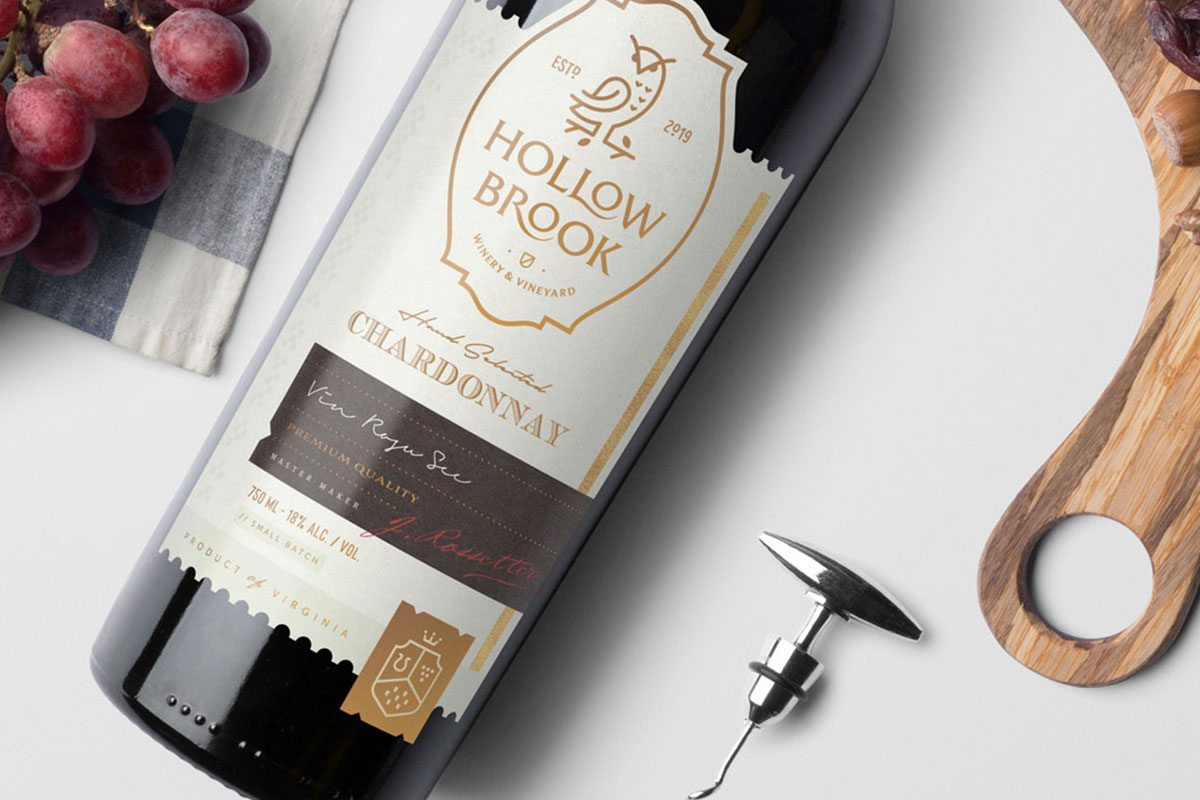
Check out this beautiful wine brand visual expression that we created for one of our clients, stemming from a robust brand strategy and culminating in a superb brand identity and label design.
Visual Expression
There is a reason that a robust brand has a strong logo, and it is pretty simple. We are visual beings. The earliest cave paintings serve as a timeless testament to this. Tens of thousands of years ago, before people understood the laws of nature, when they had barely mastered fire, there were artists capable of creating breathtaking works of art.
The animals that adorn these caves represented life and vitality to these ancient peoples and their presence on these primeval walls serves as evidence of the human capacity for visualization.
Visual expression has always been with us.
What is more, the human brain loves association. It is far easier to understand one concept if it is somehow related to another—already understood—concept. We use logos because they are simple visual representations of our values, or of emotions we want to evoke. They stick in the minds of consumers and create subconscious associations.
They are powerful.
Just think of any of your favorite brands and you will very likely see their logo in your mind’s eye—effortlessly.
This is one of the primary reasons you should shell out for a good logo. It is a piece of IP that will serve you for a long time, and it is a vital component of your brand expression.
Engaging visual expression starts with the exercise you have been engaged in throughout this post: determining who you are as a brand. Until you know that, you cannot — and should not try to—settle on a logo, font or web design.
Before you commission someone to create a logo for you, you should have a clear vision of the space you want to occupy in the market, and you should know exactly what you want consumers to think of you. Only then can you create a design that will help you achieve those goals.
You want to create a logo that:
- Aligns with your brand positioning and brand personality
- Resonates with your target audience.
At the end of the day, your logo should:
- Work as a visual shorthand for your brand promises
- Convey your brand values
Somewhere along the way, you will want to create a brand style guide. The purpose of this document is to provide anyone involved in your brand messaging with simple instructions on how the visual aspects of your branding are to be displayed. This document should specify:
- The typeface you use
- Your writing style, AKA, your editorial style guide
- How, when and where your logo should be featured
- Your color palette
Without a brand style guide, your messaging will be inconsistent. Do not leave this up to chance.
Case Studies
Finally, we would like to leave you with two case studies to consider. The first, The Rise of Social Media Influencer Marketing on Lifestyle Branding: A Case Study of Lucie Fink, illustrates that brand expression is not all about your logo, typeface or other visual elements. You can humanize your brand by utilizing the rise of social media. To do this, seek the aid of an established social media influencer who resonates with your target audience.
Lucie Fink, a lifestyle host, has leveraged her large audience for several companies, such as Prophecy Wines, Baskin Robins and Ocean Spray. There are hundreds of social media influencers across multiple platforms with passionate, responsive followings.
According to the paper, the two most effective platforms for this type of sponsored content are Instagram and YouTube.
Additionally, the study found that social media influencers’ success does not hinge on their follower count, as one might expect. Instead, their success depends on their ability to influence followers, primarily by demonstrating confidence, authenticity, and interactivity.
Essentially, you can leverage their authority, trust and visibility to create a connection with potential customers.
Our second case study, How Ochsner Health System Re-Positioned Itself, is a stellar example of revitalizing brand expression. The Ochsner Health System found itself blending in with its competitors, and it felt that its slogan, Healthcare with Peace of Mind was no longer resonating with consumers. Research conducted by the publishers of the white paper bore this out.
Ochsner’s new slogan, Relentless, however, came back with a whopping 81% positive reaction.
See the white paper for insights into how to revitalize your brand messaging. If a stodgy entity like a health care system can do it, we can all do it.

Mash Bonigala
Creative Director & Brand Strategist
With 25+ years of building brands all around the world, Mash brings a keen insight and strategic thought process to the science of brand building. He has created brand strategies and competitive positioning stories that translate into powerful and stunning visual identities for all sizes of companies.
Featured Work
See Our Work in Action
Real brands, real results. Explore how we've helped businesses transform their identity.


Client Love
What Our Clients Say
Don't just take our word for it. Hear from the brands we've worked with.

Christian Nocera
Dapper Yankee
"Delighted to have used Spellbrand for our last project. The work was thorough and results excellent. For me it was such a pleasure to work with Mash who was able to keep up with all my last minute requests for small changes. Nothing was too much of a problem and I would have to say that its great to work with people who do actually put the customer needs first! One thing saying it, its another thing doing it – Thanks Mash!"

Sue Politte
Success In Focus
"Love it! My brand identity and logo helps quickly communicate what I do. I coach very busy business leaders who want to take their organization to the next level and are tired of all the things that are slowing things down or blocking progress. My brand identity needed to grab visual attention and communicate quickly that I help my clients get focus so they gain and build success. My new brand will help my potential clients identify with me. Thank you!!!!"
Related Services You Might Love
Based on what you just read, here are services that can help you achieve similar results for your brand.
Free Download
Brand Consistency Checklist
A 27-point checklist to audit your brand across every touchpoint. Used by our team on real client projects.
Success! Check your email for the download link.
Instant PDF download. We'll also send branding tips -- unsubscribe anytime.
Keep Reading
Related Articles

Mar 23, 2026
Brand Collateral Design: How to Build a Cohesive System That Reinforces Your Brand at Every Touchpoint
How to design brand collateral as a system rather than a series of one-off projects. Covers business cards, packaging, digital assets, and building a scalable brand collateral system.
Read More
Mar 21, 2026
Brand Identity System: The Complete Guide to Building a Memorable Brand
How to build a brand identity system from strategy through logo, color palette, typography, and brand guidelines. The framework we use with every client at Spellbrand.
Read More
Mar 19, 2026
Brand Identity Design: The Strategic Process Behind Visual Identities That Command Markets
Brand identity design is more than logos and color palettes. The complete process for building a visual identity system that differentiates, builds trust, and scales.
Read More